An alarm receiving centre (ARC) is a staffed monitoring station that receives signals from fire, intruder and panic alarms over a phone line, broadband or mobile network. When your alarm activates, trained operators check the signal and follow an agreed plan: they call your key holders and, where agreed, the fire service or police. A monitored fire alarm means someone acts on an activation even when nobody is in the building. This guide explains how ARC monitoring works, how the signal gets there, who needs it and what to ask before you sign up.
What does an alarm receiving centre do?
A fire alarm on its own makes a noise inside the building. That works when people are there to hear it. Most buildings are empty for long stretches, though: overnight, at weekends and over bank holidays. An alarm sounding in an empty office or unit warns nobody.
An alarm receiving centre closes that gap. Your alarm panel is connected to the ARC, and every activation, fault and test signal is sent there. Operators see which site the signal came from, what kind of signal it is (a fire, a fault, an intruder or a panic alarm) and the response plan agreed for that site. They then act on it straight away.
ARCs are also called alarm monitoring centres or monitoring stations. In the UK, good ones are independently inspected, and the standard for alarm receiving centres is BS EN 50518.
How a monitored fire alarm works, step by step
- A detector or call point activates. Smoke, heat or a manual call point puts the fire alarm panel into alarm.
- The panel signals the ARC. A signalling unit connected to the panel sends the alarm over one or more communication paths.
- An operator receives it. The ARC’s system shows the site, the type of signal and the response plan.
- The plan is followed. Key holders are called in the order you choose and, where agreed, the fire service is called.
- Everything is logged. The activation, the calls made and the outcome are recorded, which helps you investigate false alarms and keep your fire safety records up to date.
Faults are handled the same way. If the panel reports a fault, or the signalling path goes down, the ARC is told, so a problem doesn’t go unnoticed until the next service visit.
How the alarm signal reaches the ARC
The link between your panel and the monitoring station is called alarm signalling. It needs to be reliable, because a monitored alarm that can’t get its signal out gives you nothing.
Older systems often used a single phone line, and many people still know alarm signalling by older names such as BT Redcare. Today the usual choice is dual-path signalling, which sends alarms over two separate routes, such as your broadband and a mobile network. If one path fails, the signal still gets through on the other, and the failed path is reported as a fault.
This matters more as the UK’s old copper phone network is switched off. If your alarm still signals over an old analogue line, it’s worth checking now what it will use instead.
Who needs a monitored fire alarm?
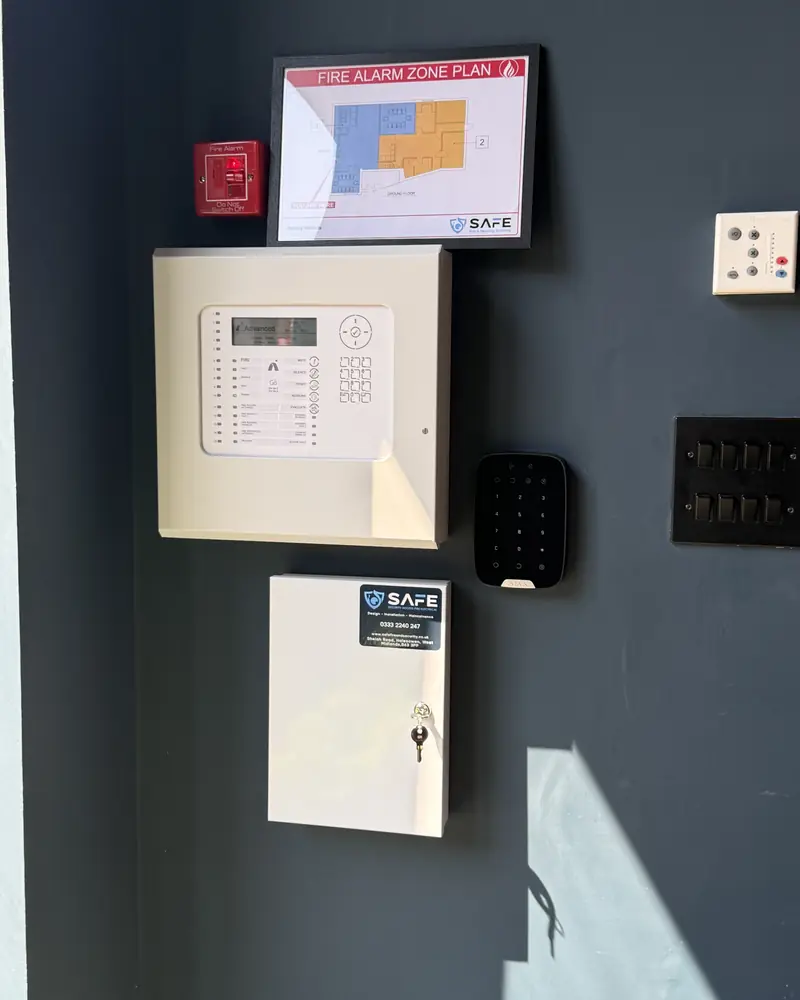
There’s no single rule that says every business must have ARC monitoring. Whether you need it depends on your building, the people in it and your fire risk assessment. Monitoring is usually worth it, or expected, in these cases:
- Buildings that are empty out of hours. Offices, shops, schools and industrial units that close overnight or at weekends.
- Buildings where people sleep. In care homes and other sleeping-risk buildings, a fast response matters most. The 2025 edition of BS 5839-1, the code of practice for fire alarms in non-domestic buildings, treats a missing remote monitoring connection to an ARC in residential care premises and supported housing as an unacceptable variation. In other words, to meet the standard, a care home fire alarm should be monitored.
- When your insurer asks for it. Insurers often specify monitoring in the small print of the policy. It’s easy to overlook until you come to make a claim, so check your policy.
- High-value or high-risk sites. Warehouses, factories and sites with expensive stock or plant, where a fire caught early is a very different story from one found the next morning.
- Where your fire risk assessment calls for it. Your fire risk assessment should say how the fire service will be called. If you don’t have a current assessment, we partner with select, highly experienced fire risk assessors we know and trust.
If you’re the Responsible Person for a building, the BS 5839-1 guide explains the categories and duties in more detail: BS 5839-1 explained for commercial buildings.
Does a monitored fire alarm call the fire brigade?
It can, but it depends on the response plan you agree and on your local fire and rescue service. Many fire and rescue services now have policies on how they respond to calls from automatic fire alarms, especially in daytime and in lower-risk premises, because so many of those calls turn out to be false alarms. Some will ask for the alarm to be checked on site first.
That’s why the response plan matters. A good plan says who gets called first, when the fire service is called, and what happens if a key holder can’t be reached. It should match your fire risk assessment and your local fire service’s policy.
False alarms and monitoring
Monitoring doesn’t cause false alarms, but it makes them more visible. Every activation is logged, so you can see which detector went off and when. That makes it easier to fix the cause, whether that’s a detector in the wrong place, dust, steam from a kitchen or shower, or work being done near a detector.
Regular servicing and testing to BS 5839-1 do most to keep false alarms down. Our guide to how often fire alarms should be tested covers the weekly test and service visits, and the weekly test should always be agreed with the ARC so it isn’t treated as a real fire.
Monitoring more than the fire alarm
The same ARC can usually monitor your other systems too, so you have one response plan for the whole building:
- Intruder alarms, with key holder response and, for a confirmed alarm system designed to BS 8243 with a police URN (Unique Reference Number), police response.
- Panic and personal attack alarms for reception desks, cash areas, shops and schools.
- Vacant property alarms for empty buildings, including battery-powered systems where the power is off.
- CCTV remote monitoring through a remote video response centre.
- Access control monitoring, so a door forced or held open is picked up.
What to ask before you choose alarm monitoring
- Is the ARC independently approved? Look for NSI Gold approval and BS EN 50518.
- Does it have a backup site? If the main centre goes down, signals should switch to a second approved site.
- How does the signal get there? Ask whether it’s dual-path signalling and what happens when a path fails.
- What’s the response plan? Who gets called, in what order, and when is the fire service called?
- Who maintains the system? Monitoring only helps if the alarm itself is reliable. Ask whether the same company services the alarm and the signalling.
- Can they take over your existing system? You shouldn’t have to replace a working alarm just to have it monitored.
- What does your insurer need? Check the policy wording before you sign, so the monitoring matches it.
How SAFE sets up fire alarm monitoring
We’re SAFE Fire & Security Systems, a BAFE registered and NSI approved fire and security company based in Halesowen. We connect fire, intruder and panic alarms, CCTV and access control to EMCS, our NSI Gold alarm receiving centre. EMCS is an independent ARC, established in 1987 and based in Nottingham. It’s NSI Gold approved for intruder and fire monitoring, accredited to EN 50518 and ISO 27001, and backed up by its own NSI Gold backup site.
Our own experienced engineers design and fit the system, set up dual-path signalling, agree the response plan with you and test the signalling with EMCS. We then maintain the system, with breakdown cover on maintenance contracts and your records in the customer portal. We can also take over the monitoring of alarms fitted by other companies.
See our commercial fire alarm monitoring page for the full service, or our commercial fire alarm installation and fire alarm servicing and maintenance pages.
Book your free site survey. Call 0333 224 0247 or send us a message, and an engineer will look at your system, your insurer’s requirements and what needs monitoring.
Frequently asked questions
What is an alarm receiving centre?
An alarm receiving centre (ARC) is a staffed monitoring station that receives signals from fire, intruder and panic alarms. When an alarm activates, trained operators check the signal and follow the response plan agreed for that site, such as calling your key holders and, where agreed, the fire service or police.
How does a monitored fire alarm work?
When a detector or call point activates, a signalling unit connected to the fire alarm panel sends the alarm to the ARC. An operator sees which site it came from and follows the agreed plan. Faults and signalling problems are reported to the ARC as well, so they don't go unnoticed.
Is fire alarm monitoring a legal requirement?
There's no single rule that every business must have ARC monitoring. It depends on your building, the people in it and your fire risk assessment. The 2025 edition of BS 5839-1 treats a missing ARC connection in residential care premises and supported housing as an unacceptable variation, and many insurers specify monitoring in their policies.
What is dual-path signalling?
Dual-path signalling sends alarm signals to the ARC over two separate routes, such as broadband and a mobile network. If one path fails, the signal still gets through on the other, and the failed path is reported as a fault. It has largely replaced older single-line signalling such as BT Redcare.
Will a monitored fire alarm call the fire brigade?
It can, depending on the response plan you agree and your local fire and rescue service's policy. Many fire services have policies on responding to automatic fire alarms, especially in daytime and lower-risk premises, so the plan should match your fire risk assessment and that policy.
Can you monitor a fire alarm another company fitted?
Yes. We can take over the monitoring of alarms fitted by other companies, connect them to EMCS, our NSI Gold alarm receiving centre, and maintain the system for you.
Do you offer alarm monitoring for homes?
No. SAFE works with commercial premises only, such as offices, shops, schools, care homes, warehouses and industrial units.