By Martin Lowe, Managing Director, SAFE Fire & Security Systems Ltd, Halesowen
Last updated: 24 October 2026
The short answer: BS 5839-1 is the British Standard code of practice for fire alarm systems in non-domestic buildings. It sets out how a system should be designed, installed, commissioned and maintained. For you as the building owner or manager, that mainly means having the right category of system for your building, testing it weekly, getting it serviced by a competent company roughly every six months and keeping the logbook up to date. The current edition is BS 5839-1:2025.
SAFE Fire & Security Systems Ltd is a Halesowen-based, BAFE and NSI approved fire and security company providing commercial fire alarms, emergency lighting, extinguishers, CCTV, intruder alarms and access control across the West Midlands.
What is BS 5839-1?
BS 5839-1 is the code of practice for the planning, design, installation, commissioning and maintenance of fire detection and fire alarm systems in non-domestic premises. That covers offices, shops, factories, warehouses, schools, care homes, churches, hotels and most other buildings that aren’t someone’s home.
Fire alarms in homes are covered by a different part, BS 5839-6. If you manage a commercial building, Part 1 is the one that applies to you.
Is BS 5839-1 a legal requirement?
Not on its own. The law is the Regulatory Reform (Fire Safety) Order 2005 (in England and Wales). It says the responsible person must make sure the building has suitable fire detection and warning arrangements, and that they’re maintained.
BS 5839-1 is a code of practice, not the law. But it’s what fire risk assessors, insurers and fire officers will measure your system against, and following it is the usual way to show your fire alarm is suitable. In practice, if your system doesn’t follow BS 5839-1, you’ll need a good reason why.
Who is responsible for the fire alarm?
Under the Fire Safety Order, that’s the responsible person: usually the employer, the owner, or whoever has control of the premises, such as a facilities manager or managing agent. BS 5839-1 talks about “premises management” and recommends naming one person to look after the system day to day.
That person doesn’t need to be an engineer. Their job is to make sure the weekly test is done, faults and false alarms are dealt with, the logbook is kept and the system is serviced on time. There’s more on this in our guide to the responsible person and their legal duties.
What are the BS 5839-1 system categories?
BS 5839-1 splits systems into categories based on what they’re there to protect. Your fire risk assessment should say which category your building needs.
| Category | What it’s for | What it covers |
|---|---|---|
| M | Life (manual) | Manual call points and sounders only. No automatic detection. |
| L1 | Life | Automatic detection throughout the building, apart from a few low-risk areas such as toilets. |
| L2 | Life | Everything in L3, plus defined higher-risk rooms. Since 2025, this includes rooms where people sleep. |
| L3 | Life | Detection on escape routes, plus rooms that open onto escape routes. |
| L4 | Life | Detection in escape routes only, such as corridors and stairways. |
| L5 | Life | A bespoke system designed for a specific purpose set out by the fire risk assessment. |
| P1 | Property | Automatic detection throughout the building, to protect the building and its contents. |
| P2 | Property | Automatic detection in defined parts of the building only. |
Categories can be combined. For example, a factory might need an L3 system to protect people and P2 cover over a high-value storage area for the insurer. For many workplaces where nobody sleeps, a Category M system can be enough, but that’s a decision for your fire risk assessment, not a rule of thumb.
What do you need to do week to week?
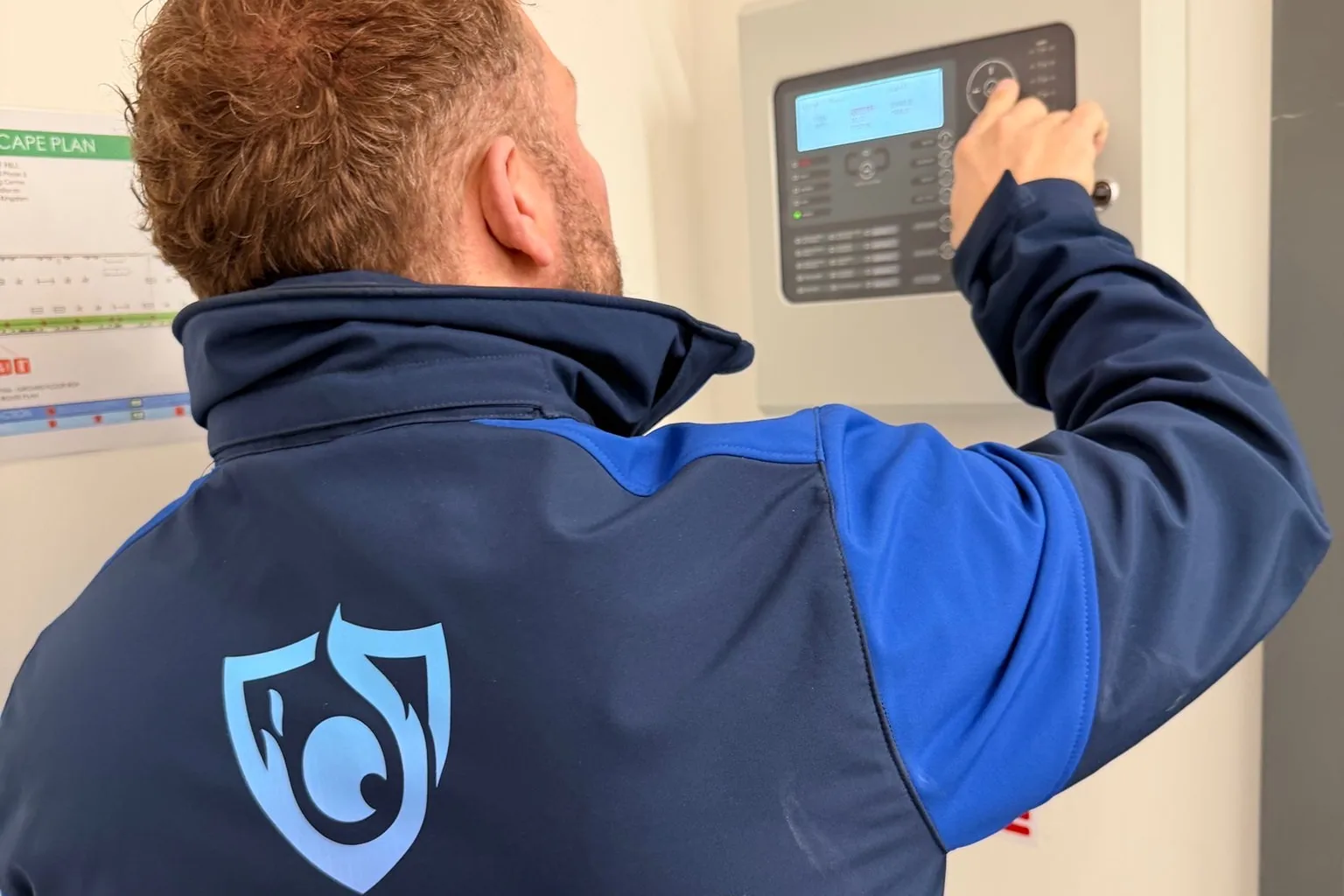
The weekly test is your job, or the job of someone you nominate, such as a fire marshal. It’s quick:
- Test a different manual call point each week, working round the building in turn.
- Do it during normal working hours, at roughly the same time each week, so people know it’s a test.
- Let everyone in the building know beforehand.
- If the system sends signals to an alarm receiving centre, tell them before you start and check they got the signal.
- Keep the alarm sounding for at least 5 seconds, but normally no more than a minute.
- Write it in the logbook, including which call point you used.
If people work in the building outside normal hours, repeat the test for them monthly so they know what the alarm sounds like. If your system has a standby generator, that needs a monthly test too.
You should also record every fault and every false alarm in the logbook, with the cause if you know it. Your servicing company uses this to spot patterns, and a fire officer or insurer may ask to see it.
For a step-by-step weekly test and the full testing timetable, see our guide: how often should fire alarms be tested?
How often should a commercial fire alarm be serviced?
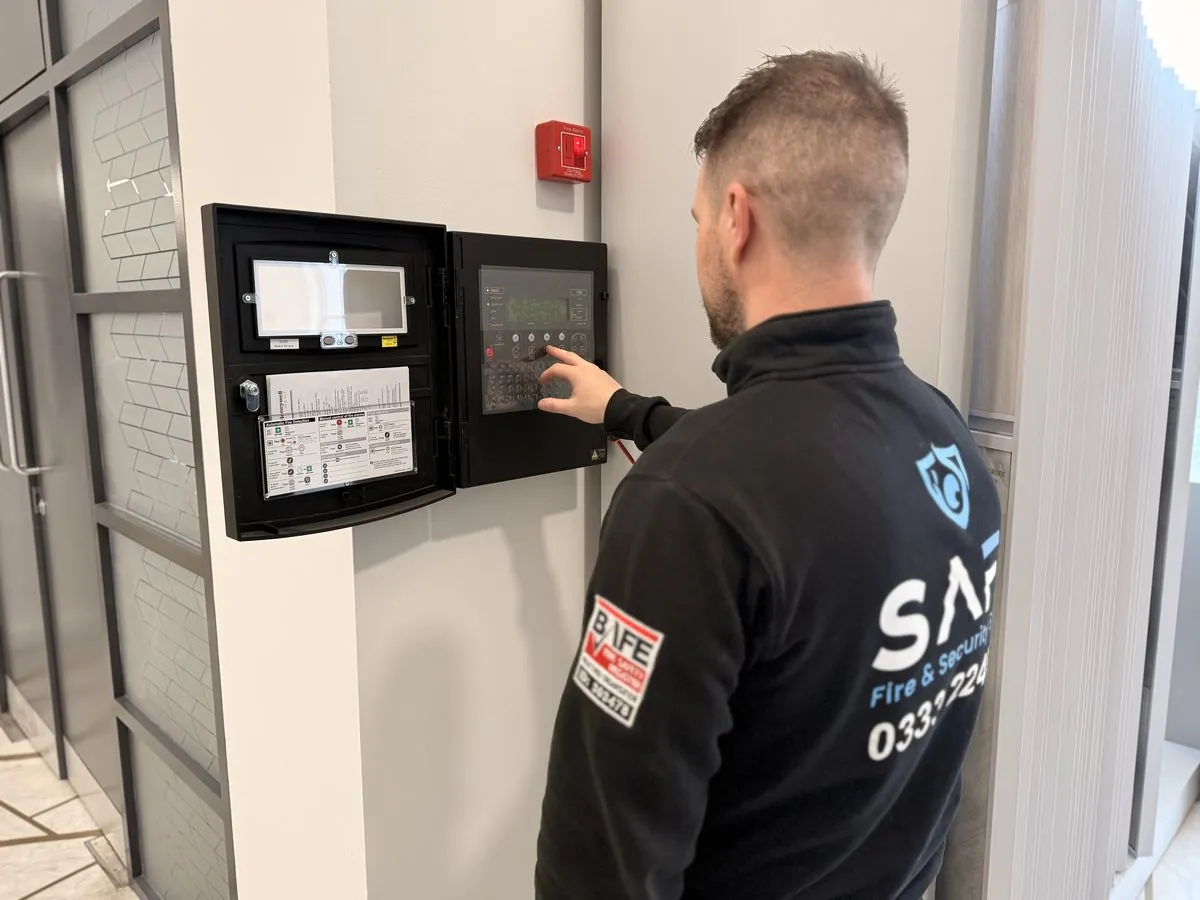
BS 5839-1 recommends that a competent person inspects and services the system at intervals of about six months. The 2025 edition added some sensible flexibility: a service any time between 5 and 7 months after the last one is acceptable, counted from the date the system was handed over.
At each service visit, the engineer should check the system, look through the logbook for faults and false alarms, check and adjust the panel clock, and confirm signals reach the alarm receiving centre if you have one. Over each 12 months, every detector and call point should be tested, and the zone plan should be checked against the building.
| How often | Who | What |
|---|---|---|
| Weekly | You or your nominated person | Test a different call point, log the result |
| Monthly (if needed) | You or your nominated person | Repeat the test for out-of-hours staff; test any standby generator |
| About every 6 months (5 to 7 months) | A competent servicing company | Inspection and service, logbook review, panel clock check, alarm receiving centre signals checked |
| Over each 12 months | A competent servicing company | Every device tested, zone plan checked against the building, duct detectors tested |
What changed in BS 5839-1:2025?
BS 5839-1:2025 came into effect on 30 April 2025 and replaced the 2017 edition. It’s a full revision. The main changes for building owners and managers are:
- Servicing window. The “every six months” rule now has a 5 to 7 month window, rather than a strict six-month limit.
- Sleeping rooms. Rooms where people sleep are now treated as high risk. L2 systems include them, and heat detectors are no longer the preferred choice in those rooms. This matters most for care homes, hotels and other sleeping accommodation.
- Extensions and modifications. There’s a new section, and a new certificate, for adding to or changing an existing system.
- Manual call points. The siting rules have been simplified.
- Variations. Some departures from the standard are no longer acceptable, even if they’re agreed and recorded.
- Records. The panel clock must be checked at each service, and the zone plan checked over each 12 months.
- Cyber security. New guidance on protecting systems that can be accessed remotely.
Does that mean you need a new fire alarm? Usually not. The standard isn’t applied backwards to systems that were properly installed under an earlier edition. But any new system, extension or major change should follow the 2025 edition, and your servicing company should be working to it now. If you’re not sure where your system stands, we’re happy to review it. Our earlier article on the latest BS 5839 updates has more background.
What paperwork should you have?
For a new system, you should be given certificates for design, installation and commissioning, and an acceptance (handover) certificate. You should also have:
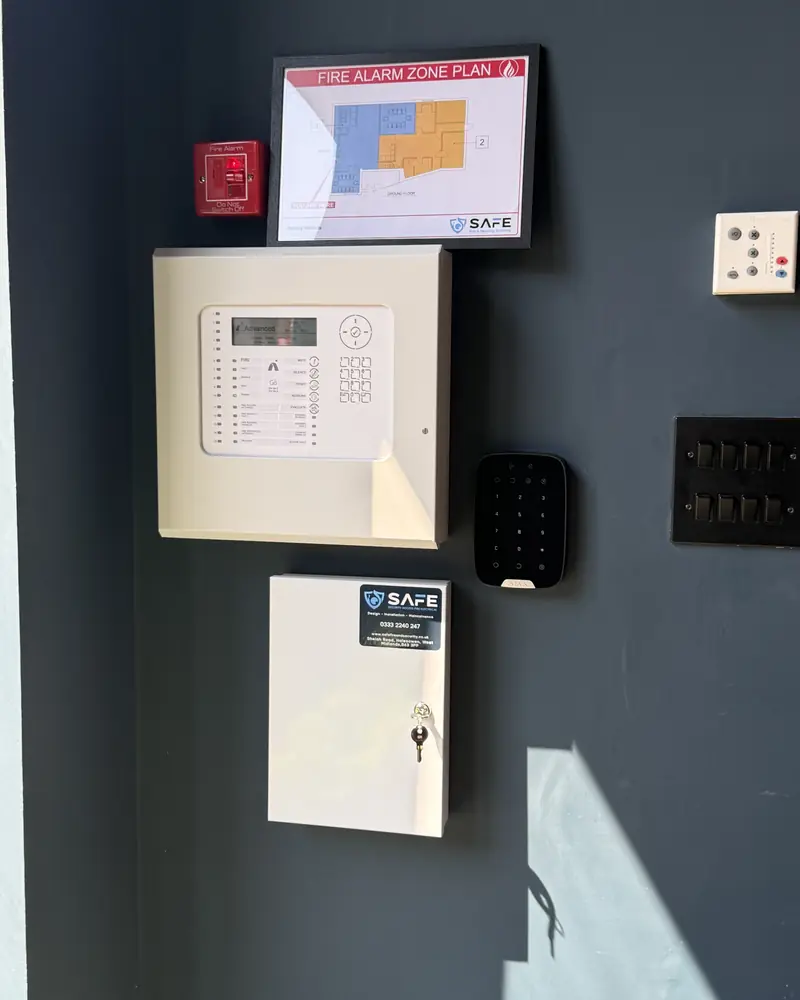
- As-fitted drawings and a zone plan displayed by the panel
- The logbook
- User instructions, and training on how to use the panel
- A servicing certificate after every service visit
- A modification certificate after any extension or change
Keep these somewhere you can find them. If a fire officer, insurer or auditor asks, you’ll need them. Our maintenance customers can see all of theirs in the SAFE customer portal.
Quick checklist for building owners and managers
- You have a current fire risk assessment, and it says which category of system you need.
- Your system matches that category.
- Someone is named to look after the system.
- A different call point is tested every week and logged.
- Faults and false alarms are logged with their cause.
- The system is serviced roughly every six months by a competent company.
- You have your certificates, drawings, zone plan and logbook.
- Any building changes are checked against the fire alarm design.
If you can’t tick every box, it’s worth a conversation. No fire risk assessment yet? We partner with select, highly experienced fire risk assessors we know and trust, and we can put you in touch.
How to choose a company to work on your fire alarm
BS 5839-1 says the work should be done by a competent person. The simplest way to check is third-party approval. BAFE and NSI approval mean an independent body inspects the company’s fire alarm work. Read more on why BAFE and NSI approval matters.
SAFE is BAFE and NSI approved. Every system is designed, installed and serviced by our own experienced engineers, all with enhanced DBS checks, which matters to the schools, academies and nurseries we work with. We plan school work for the holidays wherever we can. When the fire alarm failed at The Hollymoor Centre, a charity-run education centre in Northfield, we fitted a temporary system the next day and installed the new addressable system over the school holidays. Read the Hollymoor case study.
Planning a new system? See our commercial fire alarm installation page. Need servicing for an existing one? See fire alarm servicing.
BS 5839-1: your questions answered
What is the difference between BS 5839-1 and BS 5839-6?
BS 5839-1 covers fire alarm systems in non-domestic buildings such as offices, factories, schools and care homes. BS 5839-6 covers fire alarms in homes. If you manage a commercial building, Part 1 is the one that applies.
Is BS 5839-1 the law?
No. It’s a British Standard code of practice. The law in England and Wales is the Regulatory Reform (Fire Safety) Order 2005. But following BS 5839-1 is the usual way to show your fire alarm is suitable, and fire risk assessors, insurers and fire officers will expect it.
How often should a fire alarm be tested under BS 5839-1?
A different manual call point should be tested every week by the premises management, and the result recorded in the logbook. On top of that, a competent servicing company should inspect and service the system about every six months.
Can the six-monthly service be late?
BS 5839-1:2025 allows a service any time between 5 and 7 months after the last one, counted from the date the system was handed over. Beyond that, the system is overdue.
Which category of fire alarm does my building need?
That should come from your fire risk assessment. Many workplaces where nobody sleeps can use Category M, but buildings with higher risks, or where people sleep, usually need automatic detection such as L1, L2 or L3. We design systems around your fire risk assessment at a free site survey.
Do I have to upgrade my fire alarm because of the 2025 changes?
Not usually. The standard isn’t applied backwards to systems that were properly installed under an earlier edition. New systems, extensions and major changes should follow the 2025 edition. If you’re unsure, we can review your system.
Who can service a commercial fire alarm?
BS 5839-1 says a competent person. Choosing a BAFE or NSI approved company is the easiest way to know the company’s fire alarm work is independently inspected.
Areas we cover
From our base in Halesowen, we install and service commercial fire alarms across the West Midlands, including Birmingham, Dudley, Stourbridge, Halesowen and the Black Country, Wolverhampton, Walsall, West Bromwich, Solihull, Sutton Coldfield, Bromsgrove, Kidderminster, Redditch, Hagley and Worcester.
Not sure your fire alarm meets BS 5839-1?
Book your free site survey. It’s a short, non-invasive visit: we’ll see what’s needed, guide you to a compliant solution and give you costs. We don’t test or open up any equipment. No obligation and no hard sell.
Book your free site survey · Call 0333 224 0247 · enquiries@safefireandsecurity.co.uk