There’s no fixed price for a commercial fire alarm system, because no two buildings need the same one. The cost of a fire alarm installation depends mainly on the size and layout of the building, the category of system your fire risk assessment calls for, the type of system (conventional, addressable or wireless), how the cabling can be run, and when the work can be done. This guide walks through each of those factors, what ongoing servicing involves, and how to compare quotes fairly so you’re not caught out later.
Why we don’t publish a price list for fire alarm systems
A price list for fire alarms would either be too high for a small, simple building or too low for a large, complicated one. Two units of the same floor area can need very different systems. One might be an open-plan warehouse that needs a few beam detectors; the other might be a split-up office with dozens of small rooms, each needing its own detector.
That’s why every SAFE quote starts with a free site survey. One of our own experienced engineers looks at the building, how it’s used and what your fire risk assessment says, then we give you a written quote for the system you actually need.
The main factors that affect commercial fire alarm system cost
1. The size and layout of the building
The biggest driver of cost is how many devices the system needs: detectors, manual call points, sounders and visual alarm beacons. That depends less on square footage and more on layout. Lots of small rooms, corridors, stairwells, mezzanines and voids all add devices. Large open areas often need fewer.
Ceiling height matters too. High ceilings in warehouses and factories may need beam or aspirating detection, plus access equipment to install and service it. Our page on fire alarms for warehouses and industrial units explains the options.
2. The category of system you need
BS 5839-1 sets out categories of system. M is manual only (call points and sounders). L1 to L5 protect life, from full coverage of the whole building (L1) down to escape routes only (L4) or a specific risk (L5). P1 and P2 protect property. An L1 system needs detection in almost every area, so it costs more than an L3 or L4 system in the same building.
The right category comes from your fire risk assessment, not from the budget. We partner with select, highly experienced fire risk assessors we know and trust if you need one. Our BS 5839-1 guide explains the categories in more detail.
3. The type of system: conventional, addressable or wireless
- Conventional systems split the building into zones and tell you which zone a fire is in. They usually suit smaller, simpler buildings and cost less up front.
- Addressable systems tell you exactly which device has activated. The equipment costs more, but in medium and large buildings they can need less cabling and make faults and false alarms quicker to track down, which saves time on service visits.
- Wireless systems use radio devices that meet EN 54, so far less cabling is needed. They can cost more per device, but they often make sense in listed or heritage buildings, finished interiors or sites where running cable would be disruptive.
Many buildings use a mix. Our commercial fire alarm systems guide compares the types side by side, and our guide to the types of fire detector explains where heat, smoke and multi-sensor detectors fit.

4. Cabling and access
Wired fire alarm systems use fire-resisting cable, and BS 5839-1 sets out where standard and enhanced grades are needed. How easily that cable can be run makes a real difference to labour time. Open ceiling voids and existing containment are quicker. Solid ceilings, exposed brickwork that needs neat surface trunking, or long runs between buildings take longer.
Access is part of the same picture. Working at height, in occupied areas, or in areas with restricted access all add time.
5. When and how the work can be done
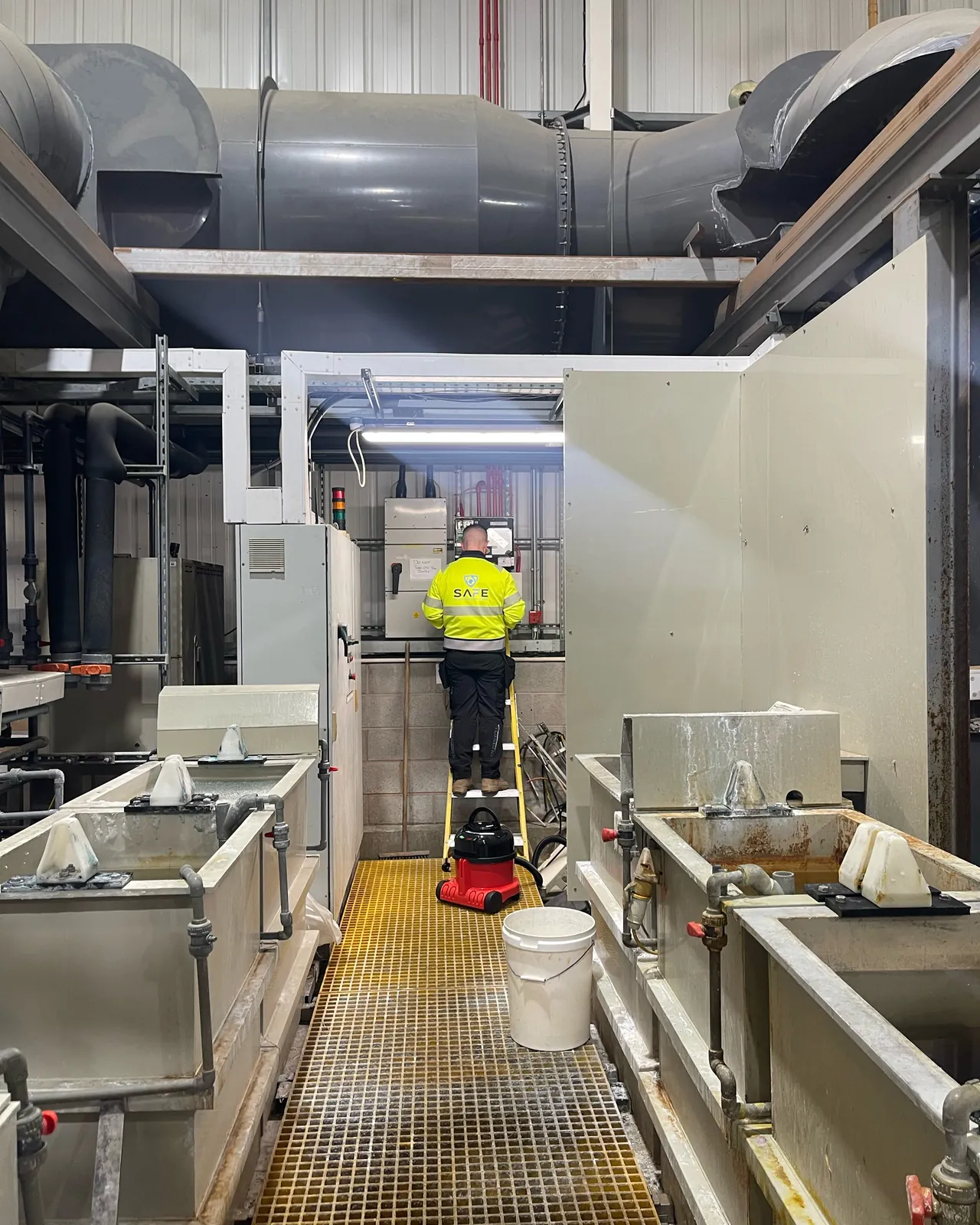
A system installed in an empty building in one go is the simplest job. If the building has to stay open, the work may need to be phased, done in quieter periods or run alongside the old system so you’re never left without protection. On a distribution centre in Corby, our engineers installed the new system in parallel with the old one so the warehouse could keep working. That kind of planning is worth discussing at the survey stage so the quote reflects how you need the work done.
6. Interfaces with other systems
Fire alarms often have to talk to other equipment: releasing access-controlled doors, grounding lifts, shutting down ventilation or gas, or signalling to a monitoring centre. Each interface adds a little to the cost, but leaving them out can leave you with a system that doesn’t do what your fire strategy needs. If you want the alarm monitored when the building is empty, see our alarm monitoring page.
7. Whether you can keep any of your existing system
Replacing a whole system costs more than upgrading part of it. Sometimes the cabling is in good condition and can be reused with a new panel and devices. Sometimes the existing panel can be extended. Sometimes the system is past saving. Our own experienced engineers work on both open and closed protocol systems, so we can give you an honest view of what’s worth keeping. Our article on the signs your fire alarm needs replacing is a good place to start.
8. Design, commissioning and paperwork
A proper installation includes more than fitting the equipment. BS 5839-1 expects the system to be designed, installed, commissioned and handed over with the right certificates, zone plans and logbook. These are part of the job, not extras, and a quote that leaves them out isn’t comparing like with like.
Fire alarm servicing cost: what to budget for after installation
The installation is only part of the cost of owning a fire alarm. BS 5839-1 recommends a service visit at least every six months, and the Responsible Person has a legal duty to keep fire safety equipment in efficient working order. What a service costs depends mainly on:
- The number of devices and panels to test.
- The type of system and how easy it is to access the devices.
- Whether other equipment, such as emergency lighting and extinguishers, is serviced on the same visit.
- Whether you want breakdown cover as part of a maintenance contract.
A well-designed system with fewer false alarms is usually cheaper to own over its life. Our fire alarm servicing and maintenance page explains what a service visit covers, and our guide to how often fire alarms should be tested covers the checks you do yourself in between.
How to compare fire alarm installation quotes
The cheapest quote isn’t always the cheapest system. Before you compare prices, check that each quote covers the same things:
- The same category of system. An L3 quote and an L1 quote aren’t comparable.
- Design to BS 5839-1. Ask who is responsible for the design and whether design, installation and commissioning certificates are included.
- Cable type and containment. Check the grade of fire-resisting cable and how it will be fixed.
- Open or closed protocol. A closed protocol panel can tie you to one company for servicing and spares. Our open vs closed protocol guide explains the trade-off.
- Interfaces and monitoring. Check that door releases, plant shutdowns and monitoring are included if you need them.
- Working hours and phasing. Make sure the quote is based on how and when the work will actually be done.
- Third-party certification. Look for a company certificated under BAFE SP203-1 for fire alarm work. Our guide on how to choose a fire alarm company lists more questions to ask.
- Servicing after handover. Ask what a maintenance contract includes, so you know the running cost as well as the installation cost.
Ways to keep the cost of a fire alarm system down without cutting corners
- Get your fire risk assessment done first. It tells you which category you need, so you don’t pay for more or less than the building requires.
- Plan ahead of a refit. Installing during a refurbishment, while ceilings are open, saves labour.
- Reuse what’s sound. Good cabling or an expandable panel may not need replacing.
- Choose the right detectors. Putting heat detectors in kitchens and the right type of smoke detector elsewhere cuts false alarms and wasted call-outs.
- Think about who will service it. An open protocol system gives you a choice of maintainers later on.
- Combine services. Having one company service your fire alarm, emergency lighting and extinguishers can mean fewer visits.
Get an accurate quote for your building
SAFE Fire & Security designs, installs and maintains commercial fire alarm systems across Birmingham, the Black Country and the wider West Midlands. We’re BAFE SP203-1 certificated for fire alarm work and NSI approved, and our own experienced engineers carry out every job. See how we approach commercial fire alarm installation, or call us on 0333 224 0247 or book a free site survey and we’ll give you a written quote for the system your building needs.
Fire alarm cost: frequently asked questions
How much does a commercial fire alarm system cost?
It depends on the building. The main factors are the size and layout, the BS 5839-1 category your fire risk assessment calls for, whether the system is conventional, addressable or wireless, how the cabling can be run and when the work can be done. The only way to get an accurate figure is a site survey and a written quote.
What affects fire alarm installation cost the most?
Usually the number of devices the building needs, which depends on its layout and the category of system, followed by the labour to run cabling and fit the equipment. Phased or out-of-hours working, high ceilings and interfaces with other systems also add to the cost.
Is an addressable fire alarm more expensive than a conventional one?
The equipment usually costs more, but in medium and large buildings an addressable system can need less cabling and makes faults and false alarms quicker to find. Conventional systems often suit smaller, simpler buildings.
Is a wireless fire alarm system cheaper to install?
Wireless devices usually cost more each, but far less cabling is needed, so installation can be quicker and less disruptive. That often makes wireless a good choice for listed buildings, finished interiors or sites where running cable would be difficult.
How much does fire alarm servicing cost?
It depends on the number of devices and panels, the type of system, how easy the devices are to reach and whether other equipment is serviced on the same visit. BS 5839-1 recommends a service at least every six months, so it's worth asking for the servicing cost alongside the installation quote.
Can I keep part of my existing fire alarm system to save money?
Often, yes. Sound cabling can sometimes be reused with a new panel and devices, or an existing panel can be extended. Our own experienced engineers work on both open and closed protocol systems and will tell you honestly what's worth keeping.
Do you charge for a site survey?
No. Every SAFE fire alarm quote starts with a free site survey, so the quote is based on your actual building and how you need the work done.