Fire safety at work comes down to a handful of things done well and kept up: know your risks, give people a safe way out, make sure they’re warned in time, and keep the equipment working. This guide sets out what the law asks of a business in England, what to check and how often, and the everyday habits that stop most workplace fires before they start.
What the law says about workplace fire safety
In England and Wales, fire safety in non-domestic premises is covered by the Regulatory Reform (Fire Safety) Order 2005, usually called the Fire Safety Order. It applies to offices, shops, factories, warehouses, schools, care homes, pubs, hotels and the shared parts of most other buildings.
The Order puts the duties on the responsible person. That’s normally the employer, or whoever owns or controls the premises, such as a managing agent. In a shared building there can be several responsible people, and they have to work together and share information. Our guide to the responsible person and their legal duties explains who that is in different buildings.
The main duties are to:
- carry out a fire risk assessment, act on it and keep it up to date
- put fire precautions in place, such as a fire alarm, emergency lighting, fire extinguishers and fire doors
- keep escape routes and exits clear and usable
- plan for an emergency, including how people will get out
- give staff information, instruction and training
- maintain the fire safety equipment so it works when it’s needed
Changes that came in from October 2023, under the Building Safety Act 2022, tightened this further. Every responsible person now has to keep a written record of the full fire risk assessment and of their fire safety arrangements, whatever the size of the business, and has to share fire safety information with other responsible people in the building.
Step 1: get a proper fire risk assessment
Everything else follows from the fire risk assessment. It looks at what could start a fire, what would burn, who’s at risk (including visitors, contractors and anyone who’d need help to get out) and whether the precautions you have are enough. It should be reviewed regularly, and whenever something significant changes, such as a refit, a new process or a change in how the building is used.
The law says the person who carries it out must be competent. For a small, simple workplace that can sometimes be someone in the business with the right training. For larger or more complex premises it’s usually worth using a specialist.
At SAFE we partner with select, highly experienced fire risk assessors we know and trust, and our own engineers then put right anything the assessment finds on the fire alarm, emergency lighting and extinguisher side. See fire risk assessments in Birmingham.
Step 2: make sure people are warned in time
Most workplaces need a fire alarm system that suits the building and the risk. The design standard for commercial buildings is BS 5839-1, which sets out categories of system, from manual call points only to automatic detection throughout. Your fire risk assessment should say which category you need. Our plain-English guide to BS 5839-1 explains the categories.
Once it’s fitted, a fire alarm needs regular checks:
| Check | How often | Who |
|---|---|---|
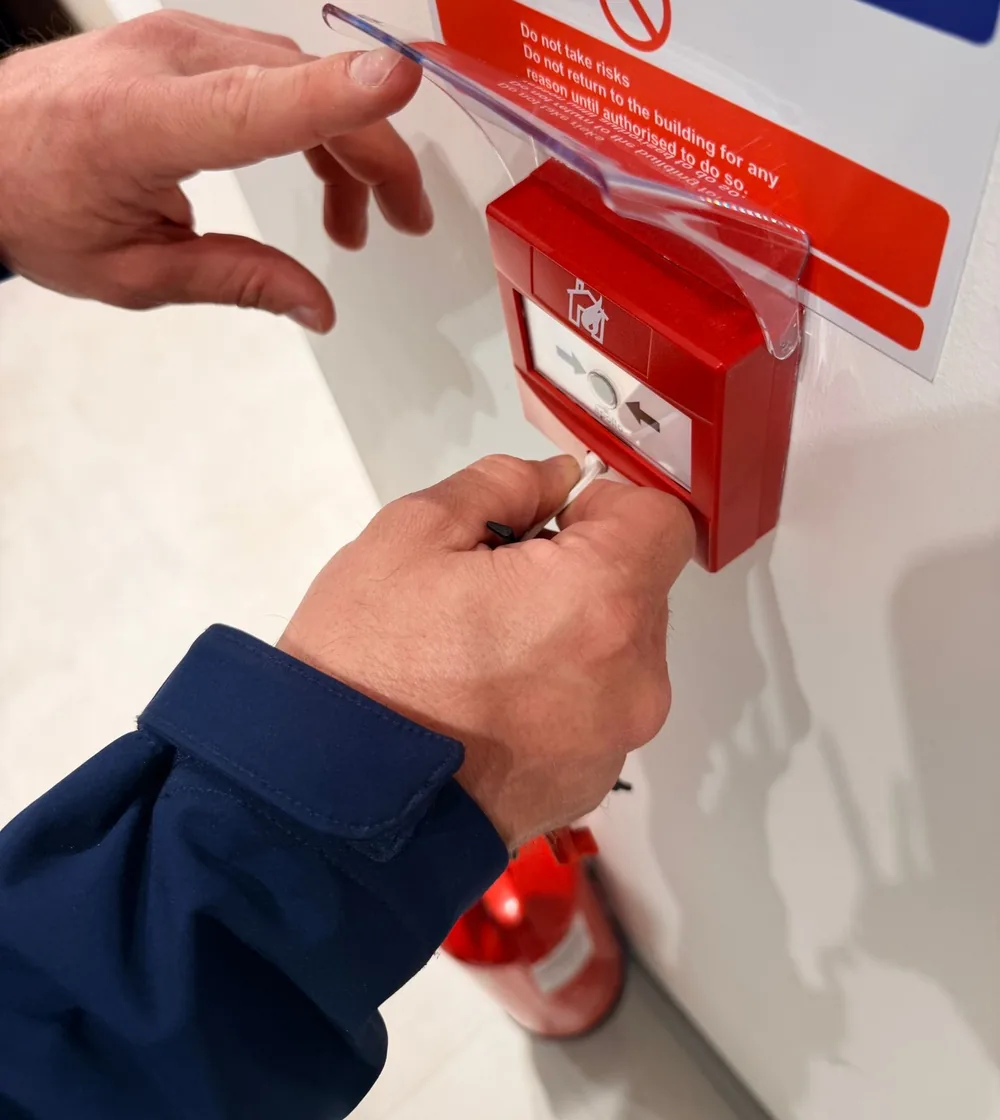
| Test the fire alarm from a different manual call point | Weekly | Someone on site |
| Fire alarm service and inspection | At least every six months | A competent fire alarm engineer |
| Emergency lighting “flick” test | Monthly | Someone on site |
| Emergency lighting full-duration test | Yearly | A competent engineer |
| Fire extinguisher service | Yearly | A competent engineer |
| Fire drill | At least yearly | The responsible person or fire warden |
Keep a fire log book with every test, service, fault and drill in it. If something goes wrong, it’s the first thing a fire officer or insurer will ask to see. Our guide on how often fire alarms should be tested covers each check step by step.
Step 3: give people a safe way out
A safe escape route is one that’s clear, lit and protected long enough for everyone to get out.
- Keep escape routes and exits clear. No stock, deliveries, bins or chairs in corridors and stairways, and no locked or blocked fire exits while people are in the building.
- Keep fire doors shut. Fire doors hold back smoke and fire. Don’t wedge them open; if a door needs to stay open, fit a hold-open device linked to the fire alarm. Check that doors close fully and that seals and closers are in good order.
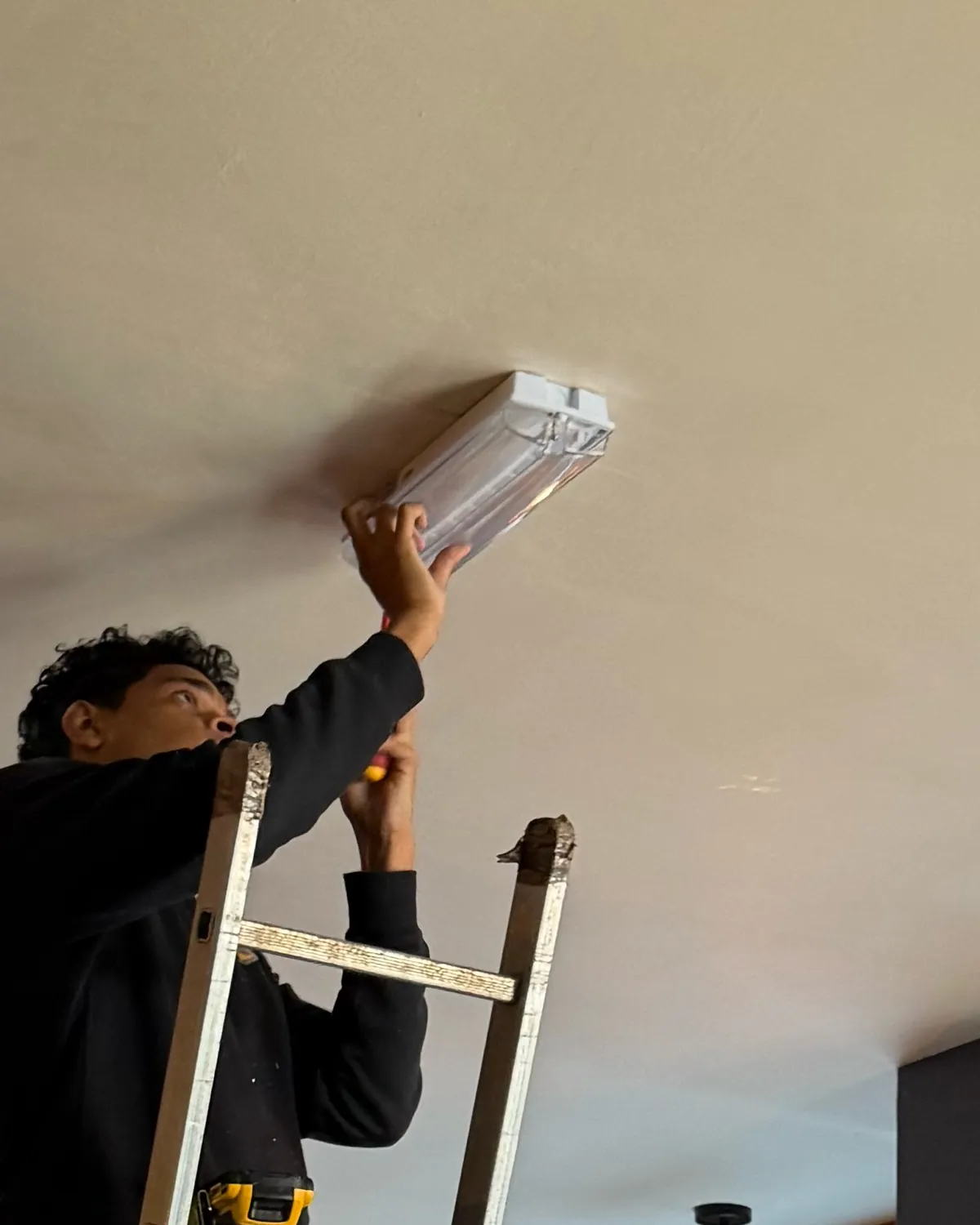
- Light the way. Emergency lighting must come on if the power fails, so people can find their way out. SAFE installs and tests self-contained emergency lighting; see emergency lighting installation and testing.
- Sign it. Fire exit signs, fire action notices and “keep shut” signs on fire doors should be clear and in the right places.
- Plan for everyone. Anyone who’d need help to get out, such as a member of staff with limited mobility, should have a personal emergency evacuation plan (PEEP).
Step 4: have the right fire extinguishers, and know how to use them
Most workplaces need fire extinguishers suited to what could burn: water or foam for paper, wood and fabric, CO2 near electrical equipment, and wet chemical in kitchens with deep fat fryers. They should be on escape routes and near specific risks, mounted on brackets or stands, and serviced every year to BS 5306-3. Our guide to fire extinguisher supply and servicing covers what we look after.
Staff don’t have to fight fires, and getting out comes first. But anyone expected to use an extinguisher should be trained to use it safely and know when to leave it and go.
Step 5: train your staff
The Fire Safety Order requires the responsible person to give employees suitable fire safety training when they start, when the risks change, and periodically after that. Good training covers:
- what to do if they discover a fire, and how to raise the alarm
- what to do when they hear the alarm, and where the assembly point is
- the escape routes, including the ones they don’t normally use
- the fire risks in their own work, and how to keep them under control
- who the fire wardens or marshals are, and what they do
Fire wardens need extra training for their role, such as sweeping their area and reporting to whoever is in charge at the assembly point. Run a fire drill at least once a year, time it, record it and fix anything that went wrong.
Good fire safety housekeeping: preventing fires at work
Most workplace fires start from something ordinary. Good housekeeping removes the fuel, the ignition or both:
- Waste: empty bins regularly, don’t let packaging and paper build up, and keep external bins and skips well away from the building and secured against arson.
- Storage: keep combustible materials and flammable liquids away from heaters, lights and machinery, and store flammables in suitable cabinets.
- Electrics: don’t overload sockets or daisy-chain extension leads, report damaged leads and plugs, and keep equipment maintained. A commercial EICR checks the fixed wiring, and PAT testing checks portable equipment. See commercial EICRs and PAT testing.
- Heat: keep portable heaters clear of anything that can burn, control hot work such as welding with a permit system, and clean kitchen extract ducts and filters.
- Smoking: keep it to a designated area away from the building, with proper bins.
- End of day: switch off equipment that doesn’t need to stay on, close fire doors and make sure the building is secure.
Fire safety in offices
Offices are usually lower risk than a factory or kitchen, but they still need the full set of precautions. The common problems we see are escape routes used for storage, fire doors wedged open for air, overloaded extension leads under desks and chargers left running overnight. In multi-let office buildings, check how your fire alarm and evacuation plan link in with the rest of the building, and who is responsible for the shared areas.
A quick workplace fire safety checklist
- ☐ Written fire risk assessment, reviewed and acted on
- ☐ Fire alarm suited to the building, tested weekly and serviced at least every six months
- ☐ Emergency lighting tested monthly and yearly
- ☐ Right fire extinguishers, serviced every year
- ☐ Escape routes clear, fire exits unlocked, fire doors shut
- ☐ Staff trained at induction and periodically, with named fire wardens
- ☐ Fire drill at least once a year, recorded
- ☐ Fire log book kept up to date
- ☐ Fire safety information shared with other responsible people in the building
Workplace fire safety: your questions answered
Who is responsible for fire safety in the workplace?
The responsible person, usually the employer, or the owner or managing agent of the premises. In a shared building there can be more than one responsible person, and they must work together and share fire safety information. See our guide to the responsible person and their legal duties.
Is a fire risk assessment a legal requirement for a business?
Yes. Under the Regulatory Reform (Fire Safety) Order 2005 every non-domestic premises in England and Wales needs a suitable and sufficient fire risk assessment. Since October 2023 every business must keep a written record of the full assessment, whatever its size, and the person who does it must be competent.
How often should you have a fire drill at work?
Government guidance says at least once a year, and more often where staff change a lot or the building is complex. Record each drill, how long the evacuation took and anything that went wrong, and act on it.
How often should a workplace fire alarm be tested?
BS 5839-1 recommends a test from a different manual call point every week, plus servicing by a competent person at intervals of no more than six months. Our guide on how often fire alarms should be tested walks through each check.
Do businesses have to provide fire safety training?
Yes. The responsible person must give employees enough fire safety training when they start, and again when the risks change, and repeat it periodically. Fire wardens or marshals need extra training for their role.
What are good fire safety housekeeping practices?
Keep escape routes and fire exits clear, keep fire doors shut, store waste and combustible materials away from ignition sources and outside buildings where possible, empty bins regularly, look after electrical equipment and switch off what isn’t needed at the end of the day.
Can SAFE help with fire safety in our workplace?
Yes. Our own experienced engineers install, service and maintain fire alarms, emergency lighting and fire extinguishers for commercial buildings across Birmingham, the Black Country and the West Midlands. For fire risk assessments we partner with select, highly experienced fire risk assessors we know and trust. Every enquiry starts with a free site survey.
Get your workplace fire safety in order
If you’re not sure your fire alarm, emergency lighting or extinguishers are up to the job, book a free site survey. Our own experienced engineers will look at what you have and give you a clear written proposal, with no obligation.