By Martin Lowe, Managing Director, SAFE Fire & Security Systems Ltd, Halesowen Last updated: 25 October 2026
The short answer: Choose a fire alarm company that is third-party approved (BAFE or NSI), uses its own trained engineers, works to BS 5839-1, gives you clear service reports that show exactly what was tested, and fits open protocol equipment so you’re never locked in. Ask the eight questions below before you sign anything.
Your fire alarm protects your staff, your customers and your business, and as the responsible person you’re legally accountable for keeping it maintained. So the company you choose matters. This guide is for business owners, facilities managers and anyone choosing a fire alarm installer or maintenance company for a commercial building.
1. Are you third-party approved for fire alarms?
Anyone can call themselves a fire alarm company. Third-party approval means an independent body has inspected the company’s work and processes. In the UK, look for:
- BAFE SP203-1, the BAFE scheme for fire detection and alarm systems.
- NSI fire approval, from the National Security Inspectorate.
Ask which parts of the work the approval covers (design, installation, commissioning, handover and maintenance) and ask to see the certificate. Our guide on why BAFE and NSI approval matters explains more.
2. Who will actually do the work?
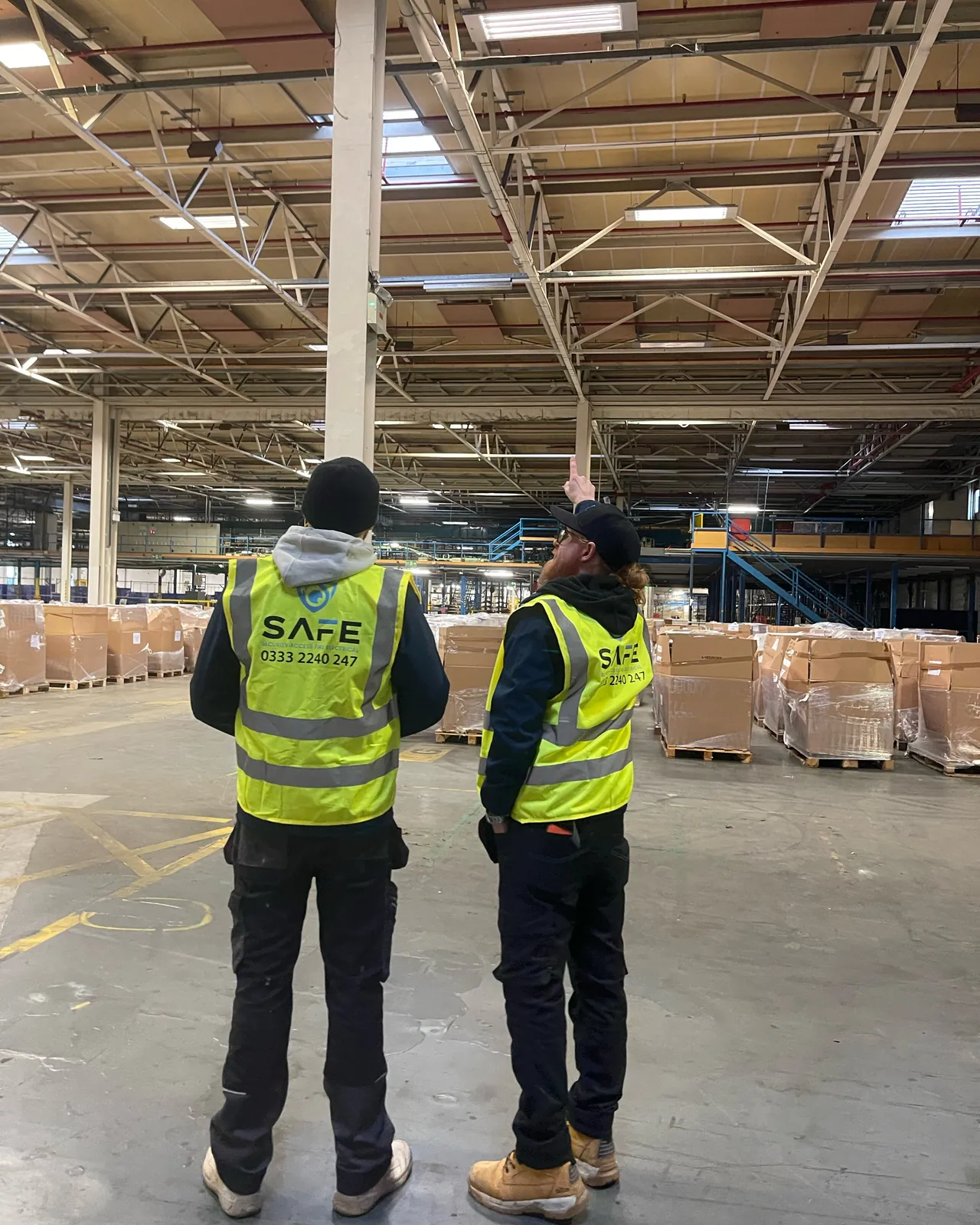
Ask whether the engineers who turn up are the company’s own, trained and employed staff, and whether they’ve been DBS checked. That matters for schools, care homes and any building with vulnerable people. You want the same team who know your building, not a different face every visit.
3. Do you work to BS 5839-1?
BS 5839-1:2025 is the British Standard for fire alarms in non-domestic buildings. A good company will design, install and service your system to it, and give you the certificates to prove it: design, installation, commissioning and acceptance. For servicing, that means a visit about every six months, with every device tested over the year. Our BS 5839-1 guide covers what to expect.
4. What will your service reports show?
A service report should show exactly what was tested, what was found and what needs doing. Vague reports that just say “system serviced” leave you exposed if your insurer or a fire officer asks questions. Ask to see a sample report before you sign, and ask where your records will be kept.

5. Is the equipment open protocol?
Some fire alarm panels are proprietary: only the company that fitted them, or its approved partners, can get the parts, software or passwords to service them. That can make it hard and costly to change company later. Open protocol equipment can be serviced by any competent fire alarm company. Ask which panel and devices are being proposed, and whether you’ll be able to switch provider in future. At SAFE, our own experienced engineers work on both open and closed protocol systems, so we can service and maintain either type. Read more in our guide to open protocol vs closed protocol fire alarms.
6. Can you take over our existing system?
If you’re unhappy with your current provider, a good company should be able to take over your system, whoever fitted it. They should check its condition and service history first, give you an honest view of what’s working and what isn’t, and only recommend replacing parts that genuinely need it. If you’re tied into a contract, they can get everything ready for the day it ends.
7. What happens when something goes wrong?
Ask what cover comes with a maintenance contract, how to report a fault, and what happens outside office hours. Ask too how they handle repeated false alarms: the answer should be finding the cause, not just resetting the panel.
8. Can you look after everything else too?
Fire alarms rarely stand alone. Emergency lighting, fire extinguishers, CCTV, intruder alarms and access control all need maintaining as well. One company that can look after all of it means one service schedule, one point of contact and one set of records. If you also need a fire risk assessment, ask how that’s arranged. At SAFE, we partner with select, highly experienced fire risk assessors we know and trust.
Red flags to watch for
- No third-party approval, or approval that doesn’t cover fire alarms.
- Reluctance to show a sample service report or certificates.
- Proprietary panels with no clear way to switch provider later.
- A hard sell to replace a whole system before anyone has looked at it properly.
- No clear answer about who will be doing the work on your site.
How we answer these questions at SAFE
- BAFE and NSI approved for fire alarm work, and an NICEIC Approved Contractor for electrical work.
- Our own experienced engineers, enhanced DBS checked.
- Designed, installed and serviced to BS 5839-1:2025.
- Service reports that show what was tested, stored in your online customer portal.
- Takeovers of existing systems, whoever fitted them, and breakdown cover on maintenance contracts.
- One team for fire alarm installation, servicing, emergency lighting, fire extinguishers and security systems.
- Rated 5.0 from 46 Google reviews.
You’re welcome to visit our training suite and demo room in Halesowen to meet the team and see systems working before you decide. Why choose SAFE.
Choosing a fire alarm company: your questions answered
What accreditation should a fire alarm company have?
Look for third-party approval for fire alarm work, such as BAFE SP203-1 or NSI fire approval. It means an independent body inspects the company’s work. For electrical work, NICEIC approval is a good sign.
What’s the difference between a fire alarm installer and a maintenance company?
Some companies only install and some only maintain. A company that does both can design, fit, commission and then service your system, so one team knows it from start to finish.
Can I change fire alarm company?
Yes. A competent fire alarm company can usually take over servicing of an existing system, whoever fitted it. It’s easier if the equipment is open protocol and you have the logbook and previous certificates.
What is an open protocol fire alarm?
It’s a system whose panel and devices can be serviced by any competent fire alarm company, rather than only the company that fitted it. It gives you more choice and avoids being locked in.
How often should my fire alarm company service the system?
BS 5839-1 recommends a service about every six months, with a window of 5 to 7 months, and every device tested over each year. You or your staff should also do a weekly call point test. See how often fire alarms should be tested.
What should a fire alarm service report include?
The date, the engineer, which devices were tested, any faults or false alarms found, what was done about them and what still needs attention. It should be clear enough to show an insurer or a fire officer.
Looking for a fire alarm company you can trust?
We install and maintain commercial fire alarm systems from our base in Halesowen, for businesses across Birmingham, the Black Country, Worcestershire, Warwickshire, Staffordshire and Shropshire.
Book your free site survey. It’s a short, non-invasive visit: we’ll see what’s needed, guide you to a compliant solution and give you costs. No obligation and no hard sell.
Book your free site survey · Call 0333 224 0247 · enquiries@safefireandsecurity.co.uk