Life safety systems are the equipment in a building that warns people of danger, helps them get out safely and lets them call for help. In most commercial buildings that means the fire alarm, emergency lighting, fire extinguishers and fire doors, and in some buildings it also includes nurse call, panic alarms and alarm monitoring. This guide explains what each system does, which standards apply, who is responsible for keeping them working and how to manage them without juggling half a dozen contractors.

What counts as a life safety system?
There’s no single legal list. “Life safety” is the umbrella term the industry uses for systems whose main job is protecting people rather than property. If a system helps people find out about a fire or emergency, escape from it, or get help, it sits under that umbrella.
It helps to think of them in three groups:
- Warning: fire detection and alarm systems, panic and lockdown alarms, and alarm monitoring that raises help when the building is empty.
- Escape: emergency lighting, fire doors and access control that releases doors when the fire alarm activates.
- First response and help: fire extinguishers, and nurse call systems in care settings.
Security systems such as CCTV and intruder alarms protect property first, but they often work alongside the life safety systems, for example when a monitored panic alarm and CCTV help staff in danger get help quickly.
The main life safety systems in a commercial building
Fire detection and alarm systems
The fire alarm is the backbone. Detectors and manual call points pick up a fire, and sounders and beacons warn everyone to leave. In commercial buildings the system should be designed, installed and maintained to BS 5839-1. The category of system (L1 to L5 for protecting life, P1 and P2 for property, and M for manual) depends on your fire risk assessment and the building.
Read more in our BS 5839-1 guide, our guide to the types of fire detector, or see how we approach commercial fire alarm installation.
Emergency lighting
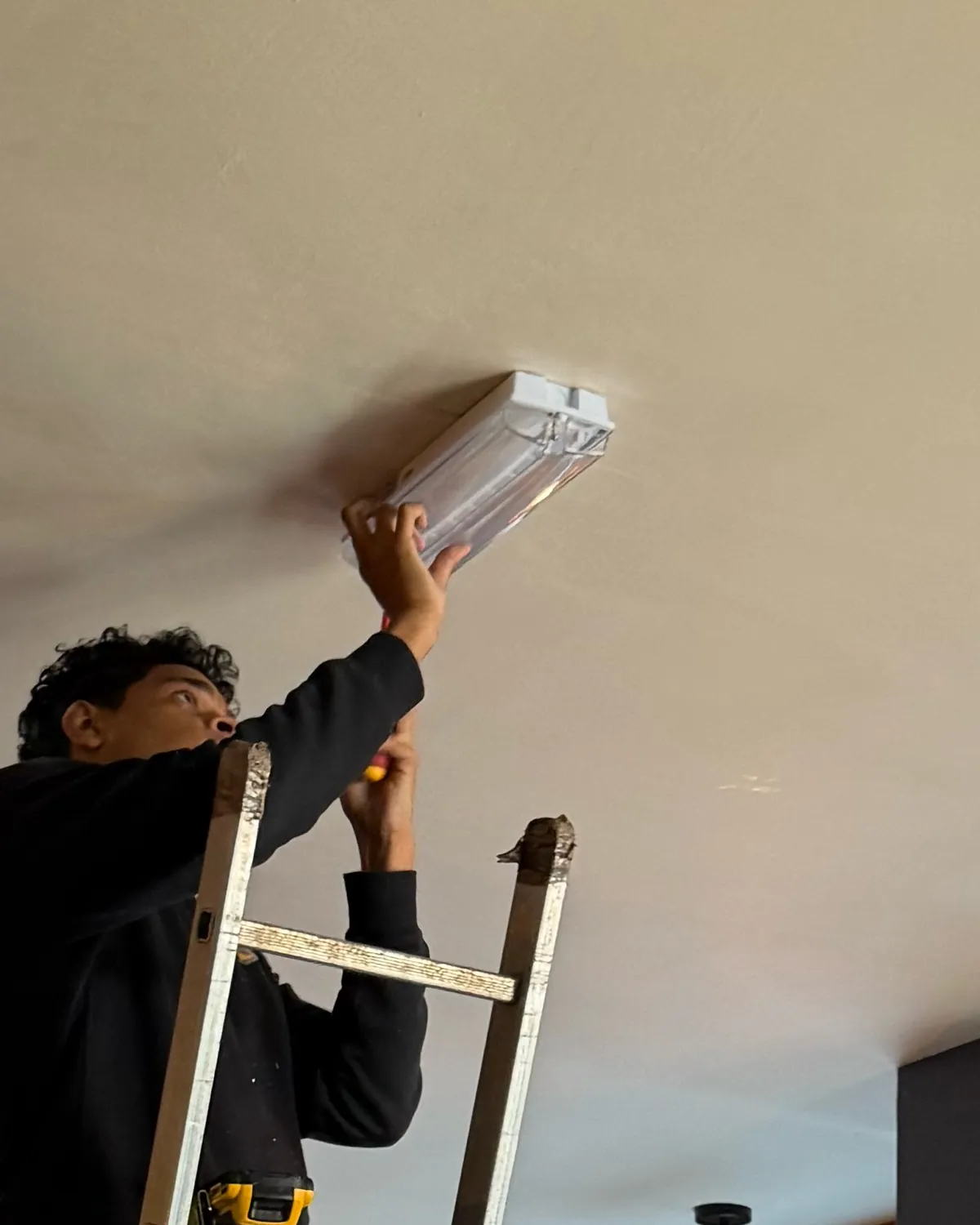
If the power fails during a fire, emergency lighting lights the escape routes, exit signs and key areas such as stairs and fire alarm call points so people can still get out. It’s covered by BS 5266-1. We install and maintain self-contained emergency lighting, where each fitting has its own battery. See emergency lighting installation and testing.
Fire extinguishers
Extinguishers let trained staff deal with a small fire in its early stages, or clear an escape route. The right type depends on what could burn in each area, and they should be serviced every year to BS 5306-3. Our guide to the types of fire extinguisher explains which goes where.
Fire doors
Fire doors are passive fire protection. When they close properly they hold back fire and smoke and protect the escape routes. A fire door wedged open, or with a broken closer or missing seals, can’t do its job. We carry out fire door inspections, repairs and replacements for commercial premises.
Access control and door release
Many buildings have doors on escape routes that are locked or held shut by access control. Those doors need to release when the fire alarm activates, so nobody is trapped. When we fit or maintain access control and door entry systems, we check how they’re linked to the fire alarm.
Panic and lockdown alarms
Panic buttons let staff raise help quietly in places like receptions, cash areas and schools. We fit lockdown and panic alarms in schools, and our fire alarms for schools page covers how they sit alongside the fire alarm.
Nurse call systems
In care homes and healthcare settings, nurse call lets residents and patients call staff at the press of a button. We install, maintain and take over nurse call systems, with regular maintenance to support CQC requirements.
Alarm monitoring
Most alarms go off when nobody is there. Monitoring sends activations from your fire, intruder and panic alarms to an alarm receiving centre, where trained operators contact your key holders or the emergency services. We connect systems to EMCS, an NSI Gold alarm receiving centre. See alarm monitoring.
Other systems your building may have
Some buildings also have sprinklers or other suppression systems, voice alarm, smoke ventilation or dry risers. These are specialist systems with their own standards. If your building has any of them, tell us at the free site survey so the fire alarm design takes account of them.
Who is responsible for life safety systems?
Under the Regulatory Reform (Fire Safety) Order 2005, the Responsible Person must make sure fire safety equipment and facilities are maintained in efficient working order and good repair. In a business that’s usually the employer, the owner or whoever controls the premises, such as a managing agent. Our article on the Responsible Person and their legal duties explains who that is.
Since 1 October 2023, the Building Safety Act 2022 has also required every Responsible Person to record their fire risk assessment in full, along with their fire safety arrangements. Your fire risk assessment is the document that says which life safety systems your building needs. For assessments, we partner with select, highly experienced fire risk assessors we know and trust. See fire risk assessments in Birmingham.
How often should life safety systems be tested and serviced?
Each system has its own routine. These are the usual intervals for the main ones:
| System | Your own checks | Professional service | Standard |
|---|---|---|---|
| Fire alarm | Weekly test of a call point | At least every six months | BS 5839-1 |
| Emergency lighting | Monthly brief function test | Annual full-duration test | BS 5266-1 |
| Fire extinguishers | Regular visual checks | Annual service | BS 5306-3 |
| Fire doors | Regular checks that doors close and aren’t wedged open | Periodic inspection, more often on busy routes | BS 8214 (inspection) |
Keep a record of every test and service visit. Our guide on how often fire alarms should be tested goes into the fire alarm side in detail.
Why one team for all your life safety systems helps
Many businesses end up with one company for the fire alarm, another for emergency lighting, another for extinguishers and someone else for fire doors. That means more visits, more paperwork and gaps where systems meet, such as door releases that nobody tests with the fire alarm.
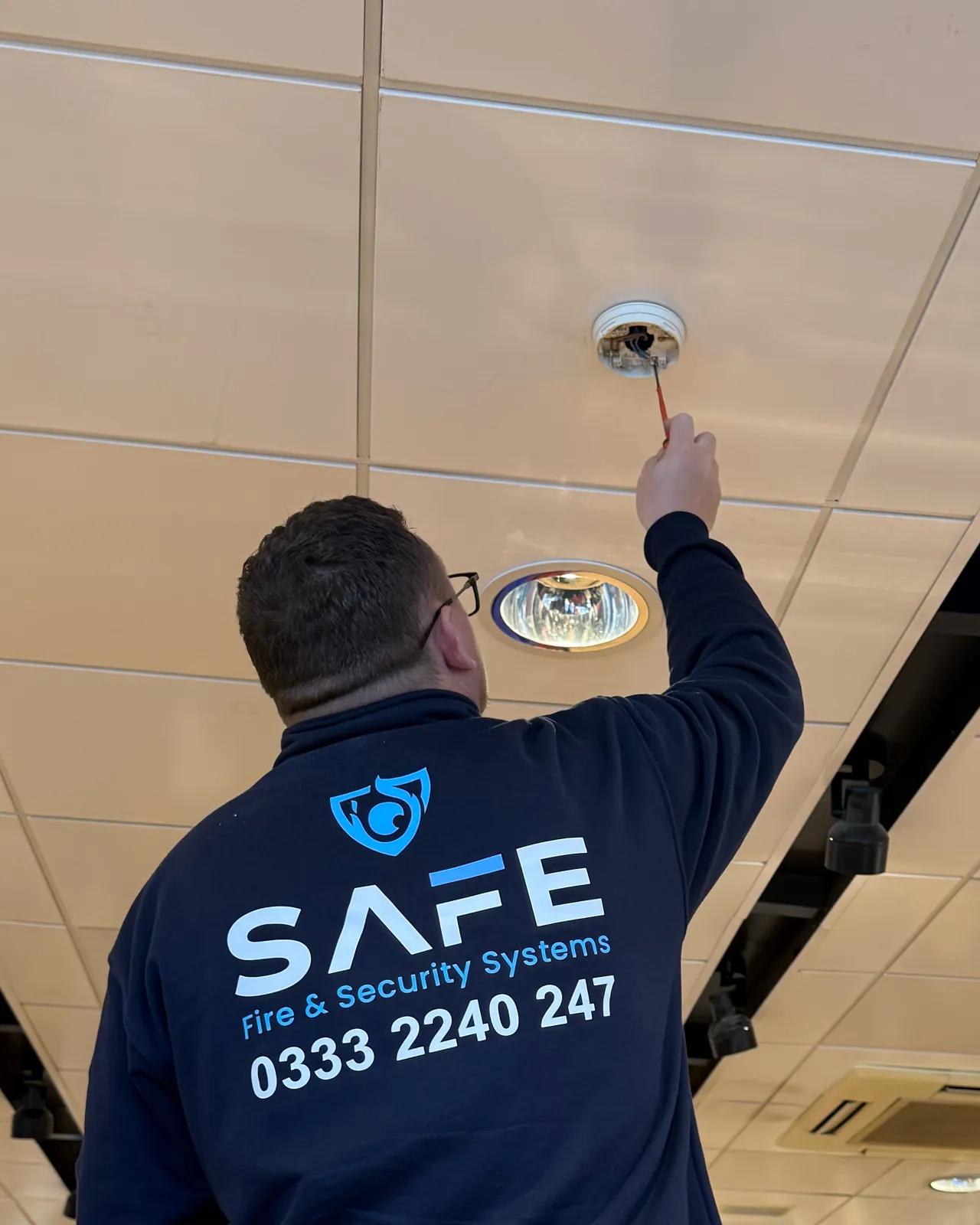
Our own experienced engineers can look after fire alarms, emergency lighting, extinguishers, fire doors, access control, nurse call, intruder alarms and CCTV, so you get:
- fewer visits, planned together where it makes sense
- one set of certificates and service records, available in our customer portal
- one point of contact if something goes wrong, with breakdown cover on maintenance contracts
- systems checked together where they interact, such as fire alarm door release
We’re BAFE registered for fire alarms (SP203-1), NSI approved, and NICEIC approved for electrical work. Our article on BAFE and NSI accreditation explains why third-party approval matters.
Taking over existing systems
You don’t have to rip out what you’ve got to change provider. Our engineers work on both open protocol and closed protocol fire alarm systems, and we regularly take over systems fitted by other companies. At the first visit we check what’s installed, its condition and its records, and tell you plainly what needs doing.
Book a free site survey
If you’re not sure which life safety systems your building needs, or whether the ones you have are up to date, we’ll come and look. Book a free site survey or call us on 0333 224 0247. We work with commercial buildings across Birmingham, the Black Country and the wider West Midlands.
Life safety systems: frequently asked questions
What are life safety systems?
Life safety systems are the equipment in a building that warns people of danger, helps them escape and lets them call for help. In most commercial buildings that means the fire alarm, emergency lighting, fire extinguishers and fire doors, and some buildings also have nurse call, panic alarms and alarm monitoring.
Is a fire alarm a life safety system?
Yes. The fire detection and alarm system is usually the most important life safety system in a building. It detects a fire and warns everyone to leave. In commercial buildings it should be designed, installed and maintained to BS 5839-1.
Who is responsible for maintaining life safety systems?
The Responsible Person under the Regulatory Reform (Fire Safety) Order 2005. In a business that's usually the employer, the owner or whoever controls the premises, such as a managing agent. They must keep fire safety equipment in efficient working order and good repair.
How often should life safety systems be serviced?
It depends on the system. Fire alarms should be serviced at least every six months to BS 5839-1, emergency lighting needs an annual full-duration test to BS 5266-1, and fire extinguishers need an annual service to BS 5306-3. You also need your own weekly and monthly checks in between.
Which life safety systems does my building need?
Your fire risk assessment should say. It looks at the building, how it's used and who is in it, and sets out what's needed, such as the fire alarm category, emergency lighting and extinguishers. We partner with select, highly experienced fire risk assessors we know and trust.
Can one company look after all our life safety systems?
Yes. Our own experienced engineers look after fire alarms, emergency lighting, extinguishers, fire doors, access control, nurse call, intruder alarms and CCTV for commercial buildings across the West Midlands, with one set of records in our customer portal.
Can you take over life safety systems another company fitted?
Yes. We regularly take over fire alarm systems fitted by others, on both open and closed protocol panels. At the first visit we check what's installed, its condition and its records, and tell you plainly what needs doing.