The difference between a heat detector and a smoke detector is simple. Smoke detectors give the earliest warning of most fires, so they protect escape routes and most rooms. Heat detectors react later, but they don’t go off every time someone makes toast, so they belong in kitchens, plant rooms and other rooms where smoke detectors would cause false alarms. This guide explains each type of fire detector used in commercial fire alarm systems, where each one goes under BS 5839-1, and how to choose the right mix for your building.
Detectors and alarms: what’s the difference?
You’ll see “heat alarm” and “smoke alarm” used for the stand-alone units fitted in homes. Those are covered by BS 5839-6 and each one sounds on its own.
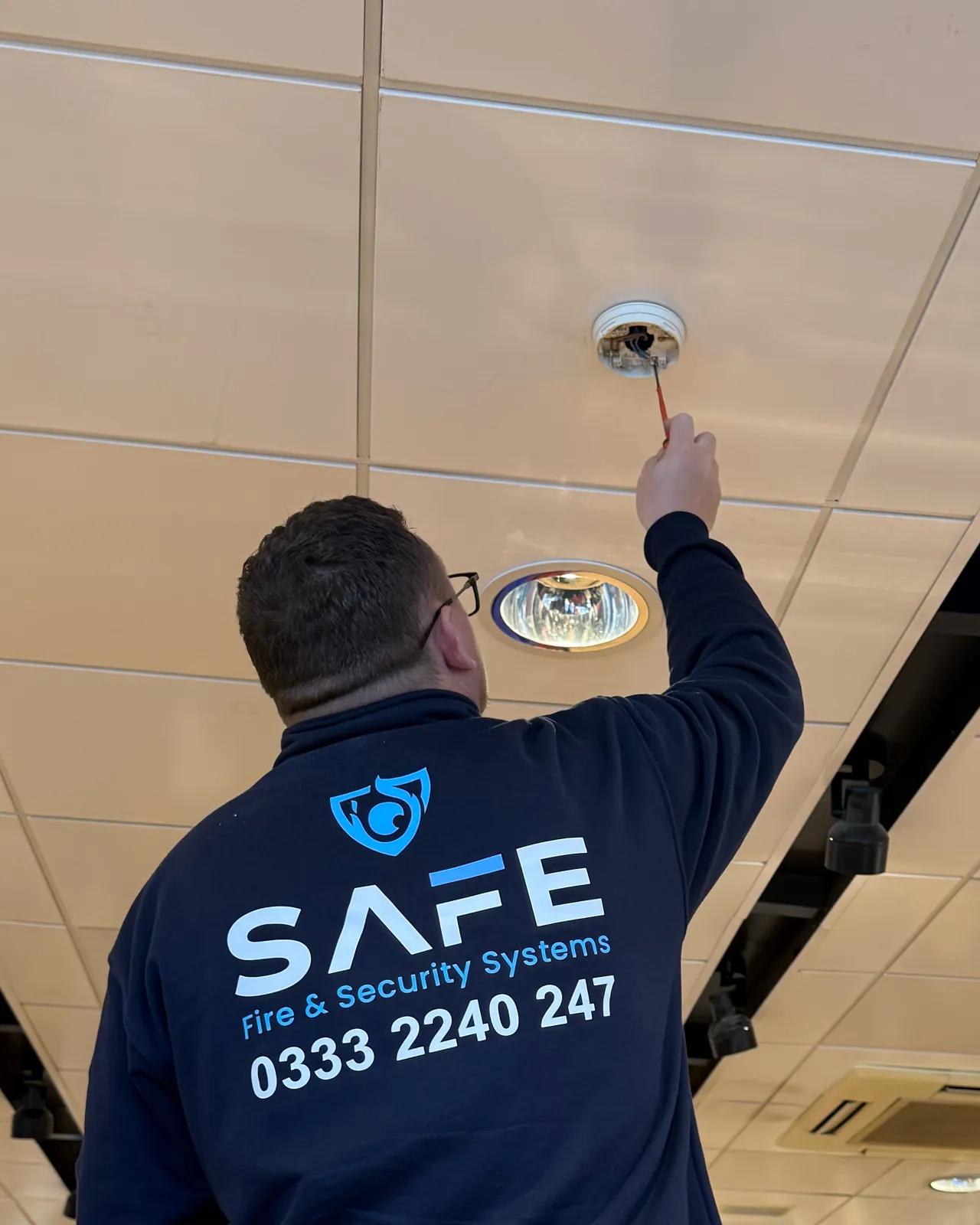
Businesses use detectors. A detector is wired (or linked by radio) back to a fire alarm control panel. When it senses a fire, the panel sounds the alarm throughout the building, shows where the fire is and, if the system is monitored, passes the signal on. Commercial systems are designed, installed and maintained to BS 5839-1. The rest of this guide is about those detectors.
Smoke detectors
Smoke detectors sense the smoke particles a fire gives off, usually well before the room gets hot. That early warning is what gives people time to get out, which is why BS 5839-1 expects smoke detection on escape routes in life-protection (L category) systems.
Optical smoke detectors
An optical (photoelectric) detector shines a light inside a small chamber. When smoke gets in, it scatters the light onto a sensor and the detector goes into alarm. Optical detectors are good at picking up slow, smouldering fires, such as wiring, upholstery or paper, which give off lots of visible smoke. They are the most common detector in offices, corridors, stairs, shops and classrooms.
Ionisation smoke detectors
Ionisation detectors use a tiny radioactive source to make a small current flow inside a chamber. Smoke particles disturb the current and trigger the alarm. They respond well to fast, flaming fires with small particles, but they are more prone to nuisance alarms and are now rarely fitted in new commercial systems. If you still have them, they need to be disposed of properly when they are replaced, so let your fire alarm company handle it.
Heat detectors
Heat detectors respond to temperature, not smoke. They won’t react to steam, cooking fumes, dust or aerosol sprays, which makes them the right choice where a smoke detector would keep going off. The trade-off is that a fire has to be producing real heat before they respond, so they give later warning than a smoke detector.
Fixed-temperature (static) heat detectors
These go into alarm when the air around them reaches a set temperature. For the common class A1 detector that is somewhere between 54°C and 65°C. Higher classes are made for rooms that are normally hot, such as boiler rooms or areas close to cooking equipment.
Rate-of-rise heat detectors
A rate-of-rise detector also goes into alarm if the temperature climbs quickly, even before it reaches the fixed threshold. That makes it faster than a fixed-temperature detector in most rooms. It isn’t suitable where the temperature normally jumps around, for example right by ovens, dishwashers or a loading door that opens onto a cold yard, because the normal swings could set it off.
Heat detector vs smoke detector: which do you need?
A smoke detector senses smoke particles and usually gives the earliest warning, which is why BS 5839-1 expects smoke detection on escape routes and in most rooms on a life-protection system. A heat detector responds to a set temperature or a fast rise in temperature. It reacts later, but it isn’t set off by steam, cooking fumes, dust or aerosol sprays.
In practice: use smoke detectors in offices, corridors, stairs, shops and classrooms; use heat detectors in kitchens, staff tea points, shower rooms, plant rooms and dusty workshops; use a multi-sensor where you need early warning without as many false alarms. The spacing rules (no point more than 7.5 m from a smoke detector or 5.3 m from a heat detector on a flat ceiling) are set out below.
Multi-sensor detectors
A multi-sensor detector combines an optical smoke sensor and a heat sensor in one head, and looks at both signals before deciding there’s a fire. That helps it tell a real fire from things like light steam or dust, so it can cut false alarms while still giving early warning. Some addressable multi-sensors can also switch between modes on a timer, for example working as a heat detector during working hours in a busy area and as a full multi-sensor at night.
Specialist detectors for large and difficult spaces
Optical beam detectors
A beam detector sends an infrared beam across a large space to a receiver or a reflector. Smoke in the beam reduces the signal and triggers the alarm. One beam can cover an area that would otherwise need many point detectors, which is why beams are used in warehouses, factories, sports halls and atriums with high ceilings.
Aspirating smoke detection
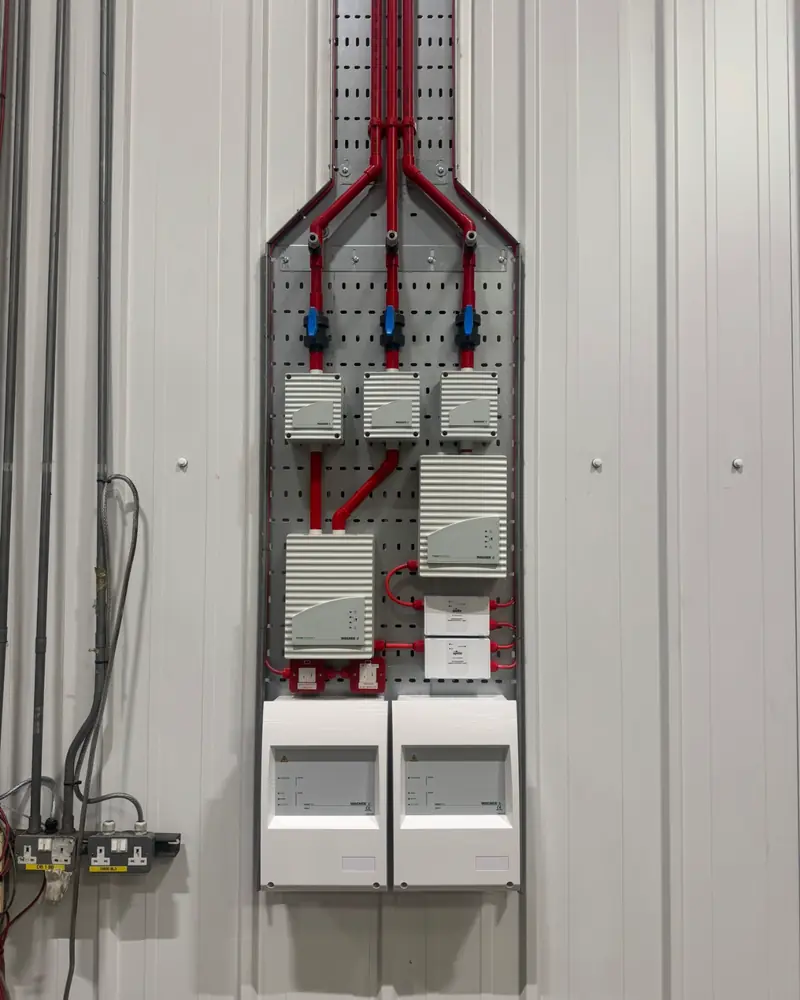
An aspirating system draws air through a network of small pipes back to a very sensitive detector unit. It can pick up tiny amounts of smoke very early, and the unit itself can sit somewhere easy to reach for servicing. It suits high-ceilinged buildings, server and comms rooms, cold stores and places where detectors on the ceiling would be hard to get to. Our own engineers design, install and maintain aspirating systems, like the one pictured below.
Flame detectors
Flame detectors watch for the infrared or ultraviolet light given off by flames. They are mainly used where a fast-burning fire is possible and smoke may not reach a ceiling detector quickly, such as large open areas where flammable liquids are stored.
Heat detectors in kitchens: what the regulations expect
A heat detector in a kitchen is the usual choice for commercial premises. There isn’t a law that names the detector you must put in a kitchen. The Regulatory Reform (Fire Safety) Order 2005 requires the responsible person to have a fire alarm system suitable for the risks found in the fire risk assessment, and BS 5839-1 is the code of practice used to design it. In practice that gives some clear rules of thumb:
- Kitchens and staff tea points: a heat detector is normally used, because cooking fumes and steam would cause false alarms from a smoke detector. In a commercial kitchen, a fixed-temperature heat detector is usually better than rate-of-rise near ovens, fryers and dishwashers.
- Corridors and stairs next to a kitchen: these are escape routes, so they normally need smoke detection. Keep kitchen doors shut, so fumes don’t drift out and trigger them.
- Open-plan kitchens and break-out areas: a multi-sensor detector can be a good middle ground where a heat detector alone would give too little warning for the people using the space.
- Shower rooms, plant rooms and dusty workshops: the same thinking applies. Use heat or multi-sensor detection where steam or dust would fool a smoke detector, and agree it with whoever designs your system.
Whatever you choose, it should be recorded in the system’s design certificate, along with any agreed variations from BS 5839-1.
How much area does each detector cover?
Under BS 5839-1, on a flat ceiling, no point in a room should be more than 7.5 m horizontally from the nearest smoke detector, or more than 5.3 m from the nearest heat detector. That’s why heat detectors are spaced more closely. Ceiling height, beams, pitched roofs and how the room is used all change the layout, which is why a proper survey matters.
| Detector type | What it senses | Typical places | Watch out for |
|---|---|---|---|
| Optical smoke | Visible smoke | Offices, corridors, stairs, shops, classrooms | Steam, dust, aerosols |
| Heat (fixed temperature) | A set temperature | Commercial kitchens, boiler and plant rooms | Later warning than smoke detection |
| Heat (rate of rise) | A fast temperature rise | Tea points, garages, stores | Rooms where temperature swings are normal |
| Multi-sensor | Smoke and heat together | Mixed-use and open-plan areas, places with occasional fumes | Needs the right mode setting |
| Optical beam | Smoke across a large space | Warehouses, factories, sports halls, atriums | Building movement, blocked beams |
| Aspirating | Very small amounts of smoke via pipework | High ceilings, server rooms, cold stores | Needs design and commissioning by a specialist |
| Flame | Infrared or ultraviolet from flames | Areas with flammable liquids, large open areas | Line of sight to the risk |
How to choose the right detectors for your building
- Start with your fire risk assessment. It sets the category of system you need (for example L2, L3 or P2) and points out the higher-risk rooms.
- Use smoke detection wherever early warning protects people, especially escape routes.
- Use heat or multi-sensor detection where smoke detectors would cause false alarms, such as kitchens and shower rooms.
- Look at the space itself. High ceilings, large open areas and hard-to-reach places may be better served by beam or aspirating detection.
- Check what your panel supports. On an addressable system, each detector is identified at the panel, and some detector types only work with certain panels. Our guide to open and closed protocol fire alarms explains why that matters when you extend or replace parts.
Our own experienced engineers design and install systems to BS 5839-1 and will mark up exactly which detector goes where during a free site survey. You can read more about the types of commercial fire alarm system and our commercial fire alarm installation service.
Keeping detectors working
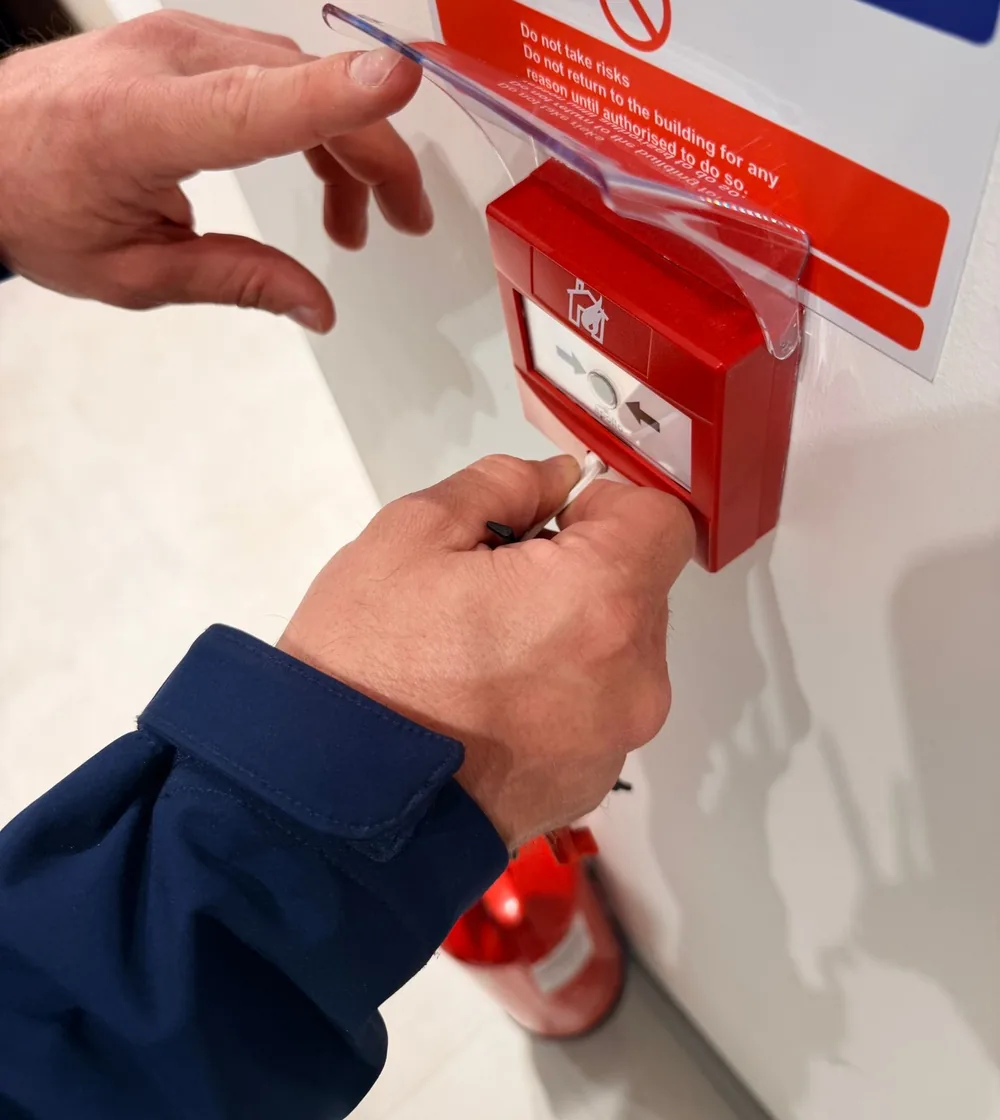
Detectors get dirty, get painted over during refurbishments and get covered up when a room changes use. BS 5839-1 expects the system to be serviced at least every six months, with every detector functionally tested over each year using test smoke or heat, not just a button. If a room’s use has changed, for example an office turned into a kitchen, the detector in it may need changing too. Our guide to how often fire alarms should be tested sets out the full routine.
Frequently asked questions
What is the difference between a heat detector and a smoke detector?
A smoke detector senses smoke particles and gives early warning of most fires. A heat detector responds to a set temperature or a fast rise in temperature, so it reacts later but isn’t set off by steam, cooking fumes or dust. Smoke detectors protect escape routes and most rooms; heat detectors go where smoke detectors would cause false alarms.
Should a commercial kitchen have a heat detector or a smoke detector?
Normally a heat detector, because cooking fumes and steam would cause false alarms from a smoke detector. Near ovens, fryers and dishwashers a fixed-temperature heat detector is usually better than rate-of-rise. The corridors and escape routes outside the kitchen still need smoke detection.
Are heat detectors a legal requirement in kitchens?
No law names a specific detector. The Fire Safety Order requires a fire alarm system that suits the risks in your fire risk assessment, and BS 5839-1 is the code of practice used to design it. Following that code usually means heat detection in kitchens.
What are the main types of fire detector?
Optical and ionisation smoke detectors, fixed-temperature and rate-of-rise heat detectors, multi-sensor detectors, optical beam detectors, aspirating smoke detection and flame detectors. Most commercial buildings use a mix of optical smoke, heat and multi-sensor detectors.
Are ionisation smoke detectors still used?
They are now rarely fitted in new commercial systems. Optical and multi-sensor detectors are more common because they give fewer nuisance alarms. Ionisation detectors contain a small radioactive source, so they should be disposed of properly when they are replaced.
How far apart should fire detectors be?
On a flat ceiling, BS 5839-1 says no point should be more than 7.5 m horizontally from a smoke detector or 5.3 m from a heat detector. Ceiling height, beams and roof shape change the layout, so it should be designed after a survey.
Can SAFE help us choose and fit the right detectors?
Yes. Our own experienced engineers design, install, service and maintain commercial fire alarm systems across Birmingham, the Black Country and the West Midlands. We’re BAFE SP203-1 certified and NSI approved. Every enquiry starts with a free site survey.
What are commercial fire detectors?
They are the smoke, heat, multi-sensor and specialist detectors wired (or radio-linked) back to a fire alarm control panel on a commercial system designed to BS 5839-1. That is different from stand-alone heat or smoke alarms used in homes under BS 5839-6, which each sound on their own. Most commercial buildings use a mix of optical smoke, heat and multi-sensor detectors, with beam, aspirating or flame detection where the space needs it.
Not sure your detectors are right for your building?
If you’ve had false alarms, changed how rooms are used or aren’t sure what your system covers, book a free site survey. Our own experienced engineers will check what you have and give you a clear written proposal, with no obligation.