Do I Even Need a Fire Alarm? How Your Fire Risk Assessment Decides

  • Home
  • Do I Even Need a Fire Alarm? How Your Fire Risk Assessment Decides
Pagetitleicon
Image
Last updated:
The short answer:

Almost every commercial building needs a proper fire detection and alarm system. Your fire risk assessment makes the decision under the Regulatory Reform (Fire Safety) Order 2005, and where it says you need a fire alarm, having one is a legal requirement, not a choice. Only very small, simple, open-plan premises can rely on a shout of "Fire!" or a hand bell.

SAFE Fire & Security Systems Ltd is a Halesowen-based BAFE and NSI accredited fire and security company providing commercial fire alarms, emergency lighting, extinguishers, CCTV, intruder alarms and access control across the West Midlands.

Who decides whether my building needs a fire alarm?

Your fire risk assessment does.

Under the Fire Safety Order, the Responsible Person (usually the employer, owner or whoever controls the premises) must have a "suitable and sufficient" fire risk assessment. Not sure if that is you? Read our guide to the Responsible Person and their legal duties.

Article 13 of the Order says that, where necessary, premises must be equipped with appropriate fire detectors and alarms. What is appropriate depends on the size and use of the building, what is stored there and how many people may be inside.

Do residents or staff keep or charge mobility scooters in your building? Read our guide: Are mobility scooters a fire risk in your building?

Can a shout of "Fire!" ever be enough?

Yes, but only in very small, simple premises.

Government guidance says that in some small, open-plan, single-storey offices and shops, a fire will be obvious to everyone as soon as it starts. If the exits are suitable and close by, a shout of "Fire!", or a gong, air horn or hand bell that everyone can hear, may be all that is needed.
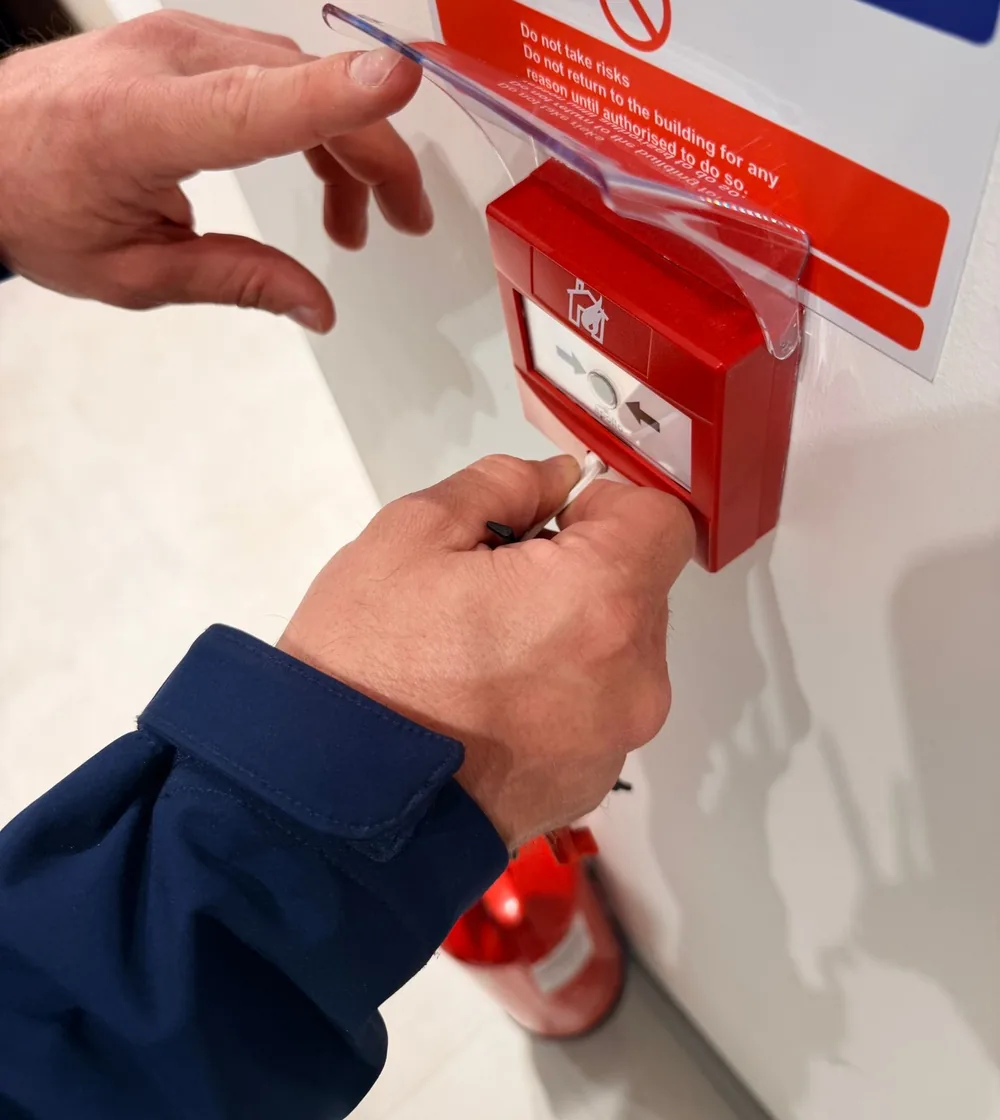
The next step up is a simple Category M system: break-glass call points by the exits, sounders and a control panel, with no automatic detection.
Engineer testing a manual fire alarm call point with a test key

When does a building need a proper fire alarm system?

You are likely to need a system designed, installed and commissioned to BS 5839-1 if any of these apply:

  • More than one room or floor, so a shout will not be heard everywhere
  • Areas where a fire could start unseen, such as stockrooms, plant rooms or basements
  • People working alone or out of earshot, such as cleaners or night shifts
  • Anyone sleeping on the premises
  • Noisy machinery, or staff wearing ear defenders
  • Complex layouts or long escape routes
  • Members of the public who do not know the building
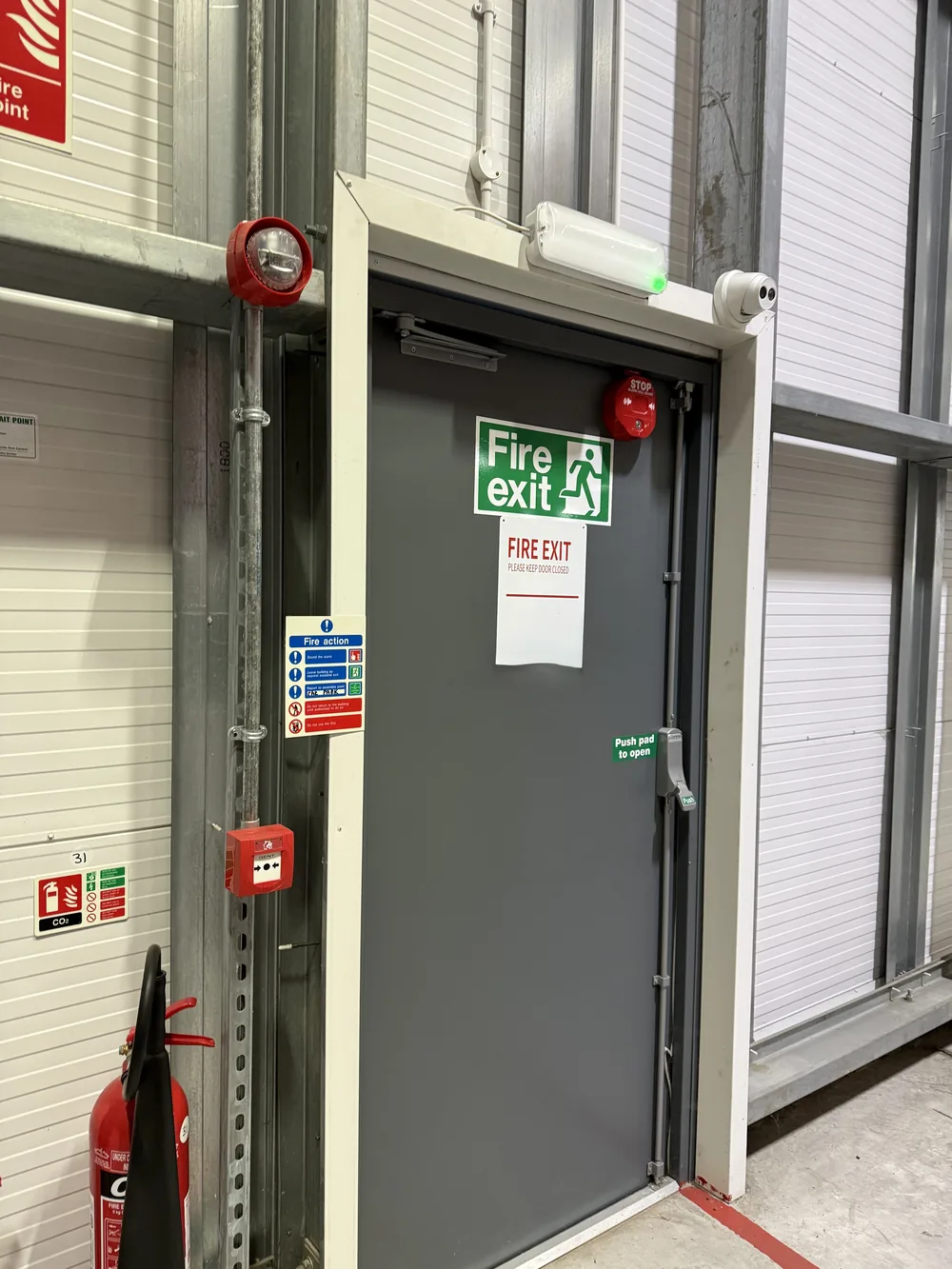
Fire exit in a commercial building with call point, sounder, emergency lighting and extinguisher

That describes most buildings we see around the West Midlands: Black Country industrial units with mezzanines, multi-floor offices in Birmingham, retail units with stockrooms, schools and care homes. Your fire risk assessment will set the category.

What do fire alarm categories M, L and P mean?

BS 5839-1 sorts systems into categories. L protects life, P protects property and M is manual only.

CategoryWhat it covers
MManual call points and sounders only
L1Automatic fire detection (AFD) throughout the building
L2L3 cover plus high-risk areas and rooms where people sleep
L3Escape routes and rooms opening onto them
L4Escape route corridors and stairways only
L5Designed for a specific fire safety objective
P1AFD throughout, to protect property
P2AFD in defined areas, to protect property

L1 to L4 include manual call points. Categories are often combined, such as L2/P2 or P1/M.

What will my fire risk assessor write if my alarm is not good enough?

Most assessments follow a similar format, often based on PAS 79-1. Look out for:

Means of giving warning in case of fire.
The alarm section heading, taken from the Fire Safety Order.
Fire detection and warning system.
The general term for your alarm.
Automatic fire detection (AFD).
Smoke or heat detectors that raise the alarm on their own.
Category of system.
The BS 5839-1 category the assessor thinks you need.
Compensating feature.
Detection added to make up for another weakness, such as a long escape route.
Findings (or significant findings).
What the assessor found.
Action plan.
The list of things to put right, with a priority and target date.
Risk level.
Often rated trivial, tolerable, moderate, substantial or intolerable.
Priority scales vary between assessors, but a missing or inadequate alarm is usually treated as high priority.

Quick checklist: signs your fire risk assessment will flag your fire alarm

  • You rely on a shout or hand bell, but have more than one room or floor
  • The alarm cannot be heard in toilets, stores, yards or noisy workshops
  • There is no detection in areas that are often empty
  • Staff work alone, early, late or at weekends
  • The building has changed but the alarm has not
  • There is no logbook, or weekly tests are not recorded
  • There has been no service by a competent engineer in the last six months

How SAFE helps you act on your fire risk assessment

We work from your assessment, not from a standard package:
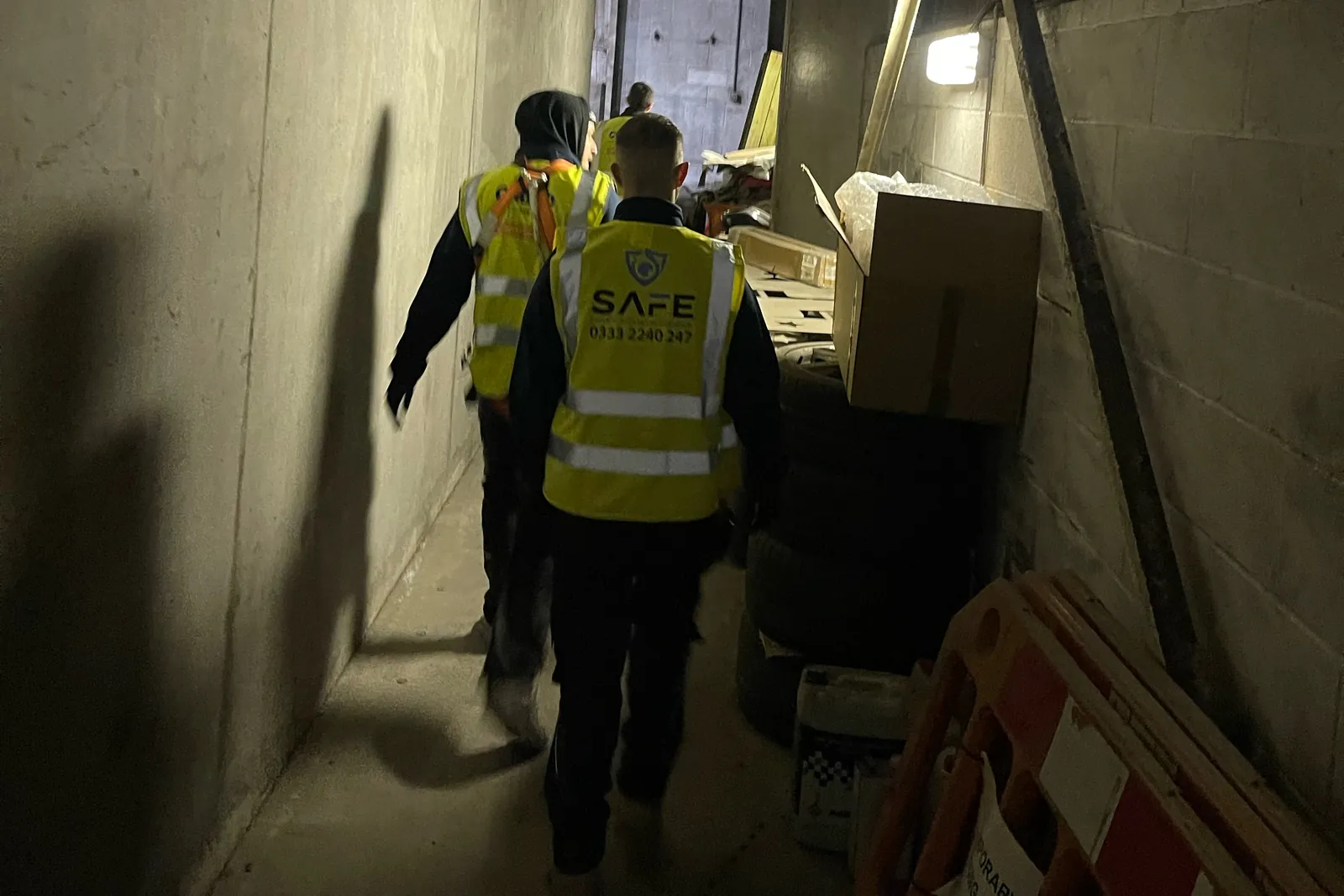
SAFE Fire & Security team carrying out a site survey
Surveying a site before designing the system.
  1. Survey.

    We look at the building, how it is used and what your assessment asks for.

  2. Design.

    We design to the BS 5839-1 category your assessment sets and agree it with you.

  3. Installation and commissioning.

    We fit and test every device and check the alarm can be heard throughout.

  4. Handover.

    You get a zone plan, a logbook and the BS 5839-1 design, installation, commissioning and handover certificates for your system.

  5. Maintenance.

    We service your system every six months in line with BS 5839-1.

  6. Your action plan.

    We can also deal with emergency lighting and extinguishers.

SAFE is BAFE registered and NSI approved, and these accreditations are recognised by insurers. See our fire safety and alarm services.

Areas we cover

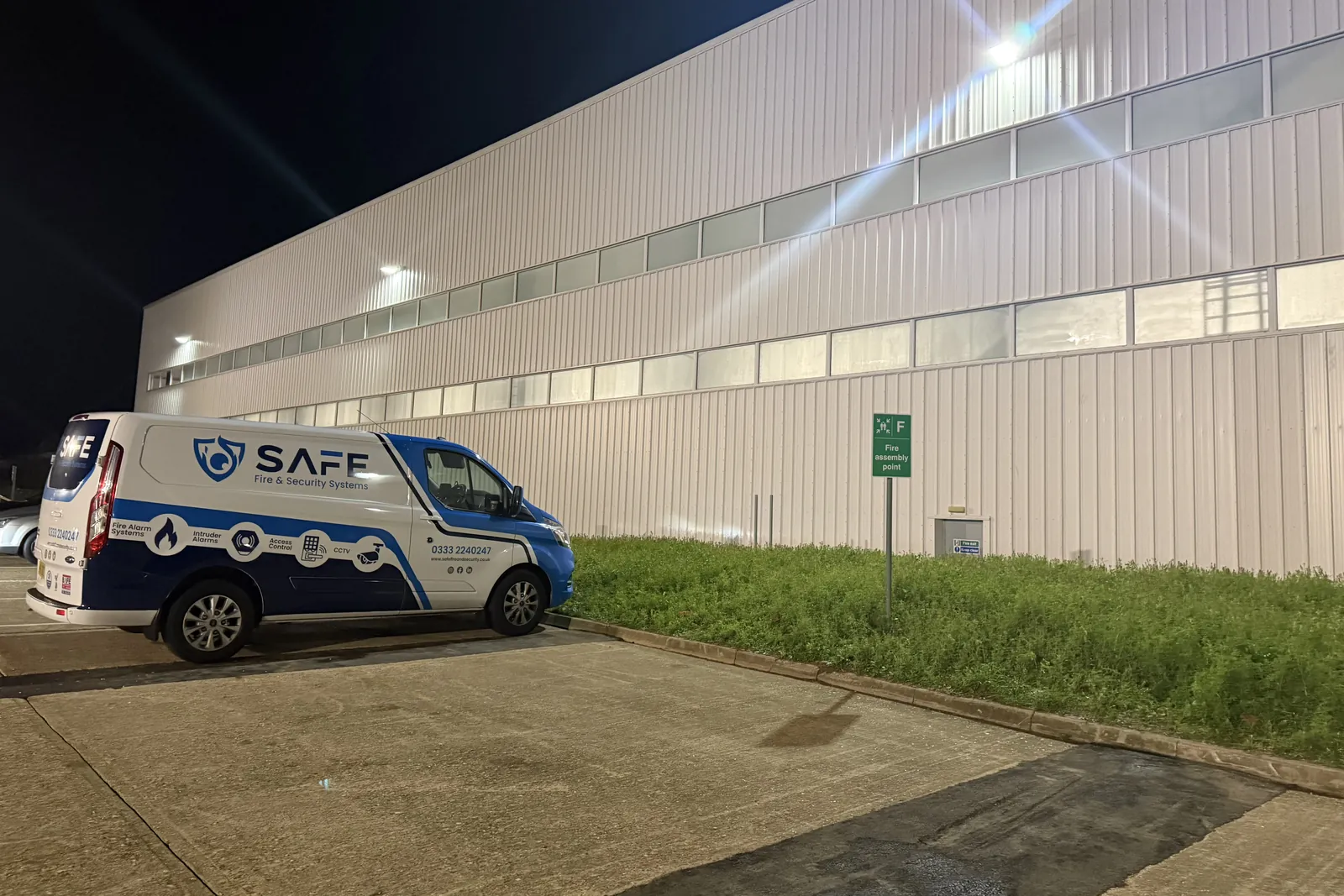
SAFE Fire & Security van at a commercial industrial unit in the West Midlands

From our Halesowen office we work across the West Midlands and north Worcestershire, including:

Dudley borough:
  • Halesowen,
  • Dudley,
  • Stourbridge,
  • Brierley Hill,
  • Kingswinford,
  • Sedgley,
  • Netherton,
  • Lye
Sandwell:
  • Oldbury,
  • Smethwick,
  • West Bromwich,
  • Wednesbury,
  • Tipton,
  • Cradley Heath,
  • Rowley Regis,
  • Blackheath
Birmingham:
  • the city centre,
  • Edgbaston,
  • Harborne,
  • Quinton,
  • Bartley Green,
  • Northfield,
  • Selly Oak
Further afield:
  • Walsall,
  • Wolverhampton,
  • Bromsgrove,
  • Kidderminster,
  • Hagley,
  • Solihull,
  • Redditch

Frequently asked questions

Is a fire alarm a legal requirement for my business?

Where your fire risk assessment says one is needed, yes. The Regulatory Reform (Fire Safety) Order 2005 requires appropriate fire detection and alarms where necessary.

Is BS 5839-1 the law?

No. It is a British Standard code of practice, but it is the benchmark assessors, insurers and fire services use to judge a fire alarm system.

Can a small shop rely on someone shouting "Fire!"?

Only if it is small, open-plan and on one floor, a fire would be obvious to everyone, and the exits are close by.

Who decides which fire alarm category I need?

Your fire risk assessment, sometimes with input from your insurer. A competent designer then designs a BS 5839-1 system to meet it.

Can SAFE help us get a fire risk assessment?

Yes. We work with a partner fire risk assessor, so we can arrange an assessment and then design, install and maintain any fire alarm system it calls for.

What does an "inadequate means of giving warning" finding mean?

The assessor does not think your current arrangement would warn everyone in time. It will usually appear in the action plan with a priority and deadline.

How often should a fire alarm be serviced?

BS 5839-1 recommends servicing by a competent engineer every six months, plus a weekly call point test recorded in the logbook.

Who enforces fire safety law in the West Midlands?

West Midlands Fire Service across the West Midlands county, and Hereford & Worcester Fire and Rescue Service in Worcestershire, including Bromsgrove and Kidderminster.

Talk to SAFE about your fire alarm

If your fire risk assessment has flagged your fire alarm, or you are not sure what you need, call SAFE Fire & Security Systems Ltd, Halesowen on 0333 2240247 or contact us online to arrange a site survey.

Leave a comment

Call usFree site survey